Every finished space tells its story at the surface.
But the quality of that story is decided long before install day.
The materials you choose – surface, substrate, and edge – determine how a project wears, how it’s fabricated, and whether it holds together as intended. When those elements aren’t aligned, even well-designed work can fall short.
That’s why Chesapeake has expanded its offering to include laminates, real wood veneers, and matching edgebanding as a connected surface system built for the realities of modern millwork.
Why Surface Systems Matter More Than Ever
Today’s projects are faster, larger, and more scrutinized than ever before:
- Designers expect visual consistency.
- Fabricators need predictable materials.
- Procurement teams need confidence that approved specs translate cleanly to delivered goods.
The most common failures don’t happen at the panel. They happen at the edge. A surface can be right—but if the edgeband doesn’t match in tone, thickness, or durability, the whole piece suffers. The difference between “acceptable” and “premium” often comes down to those final details.
Laminates, Veneers, and Edges: Different Roles, One Outcome
Laminates (HPL) are engineered for performance. Made from layers of paper and resin pressed under high pressure, they deliver durability, color consistency, and reliability across large runs. They’re often chosen for high-traffic, moisture-prone, or repeatable environments.
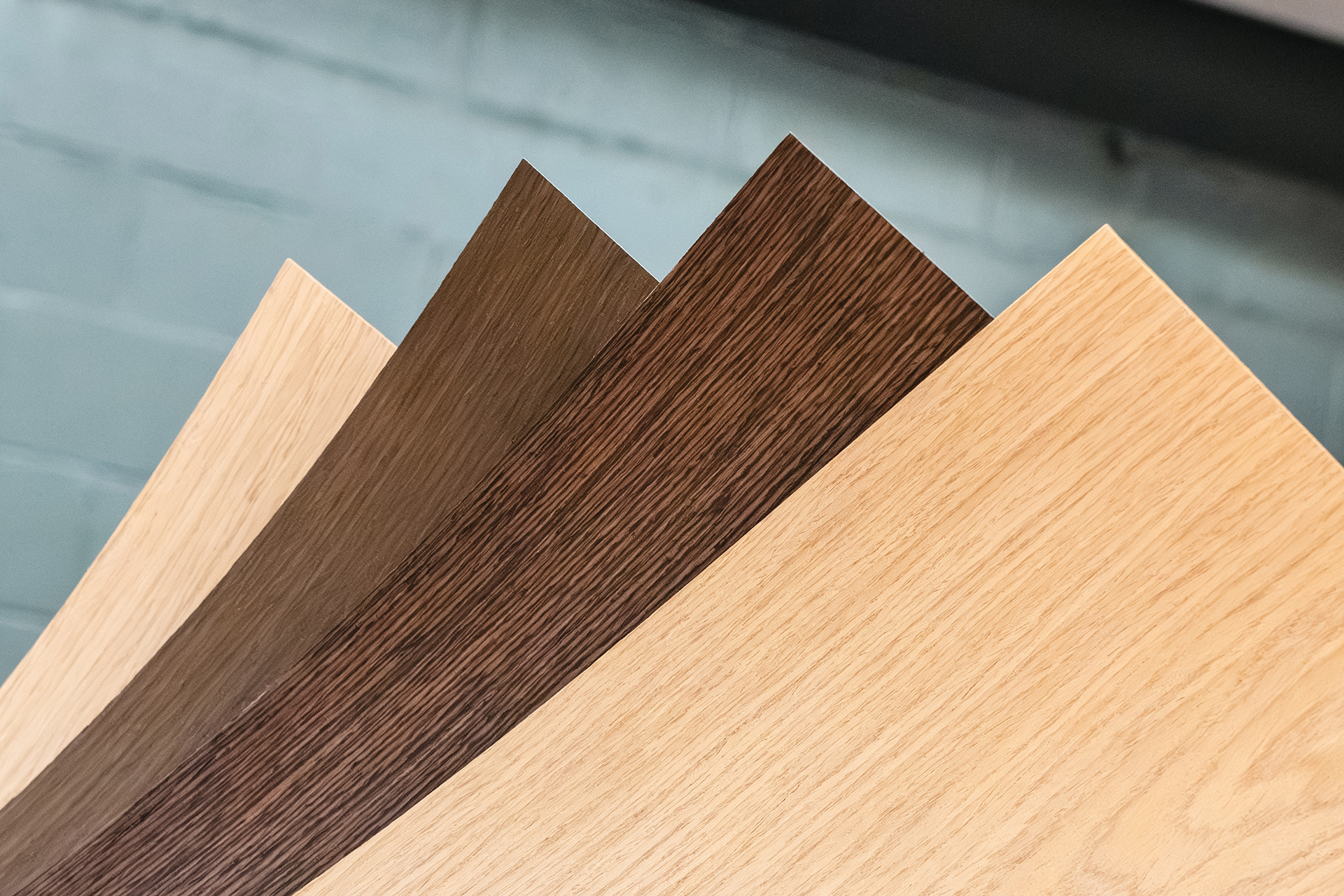
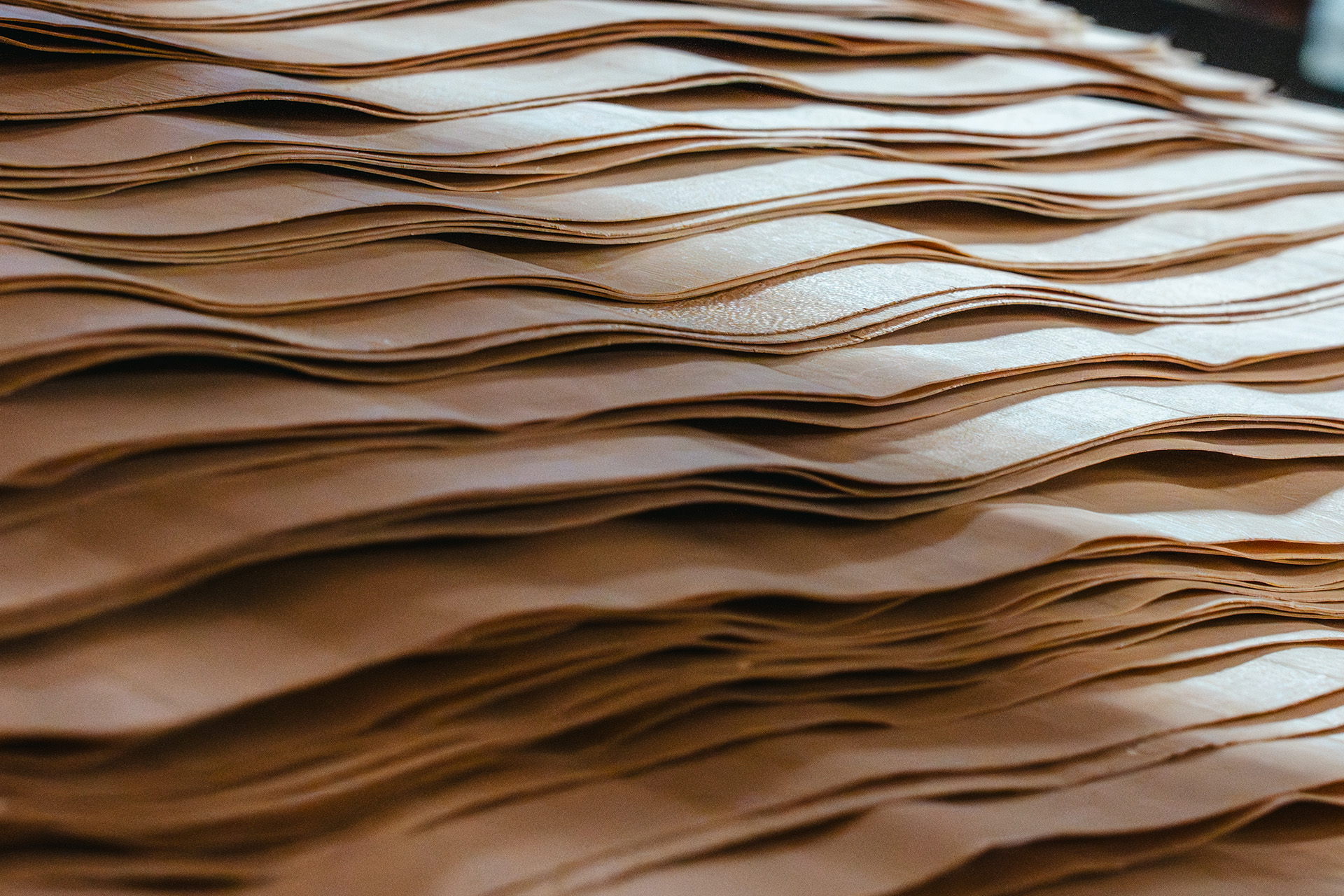
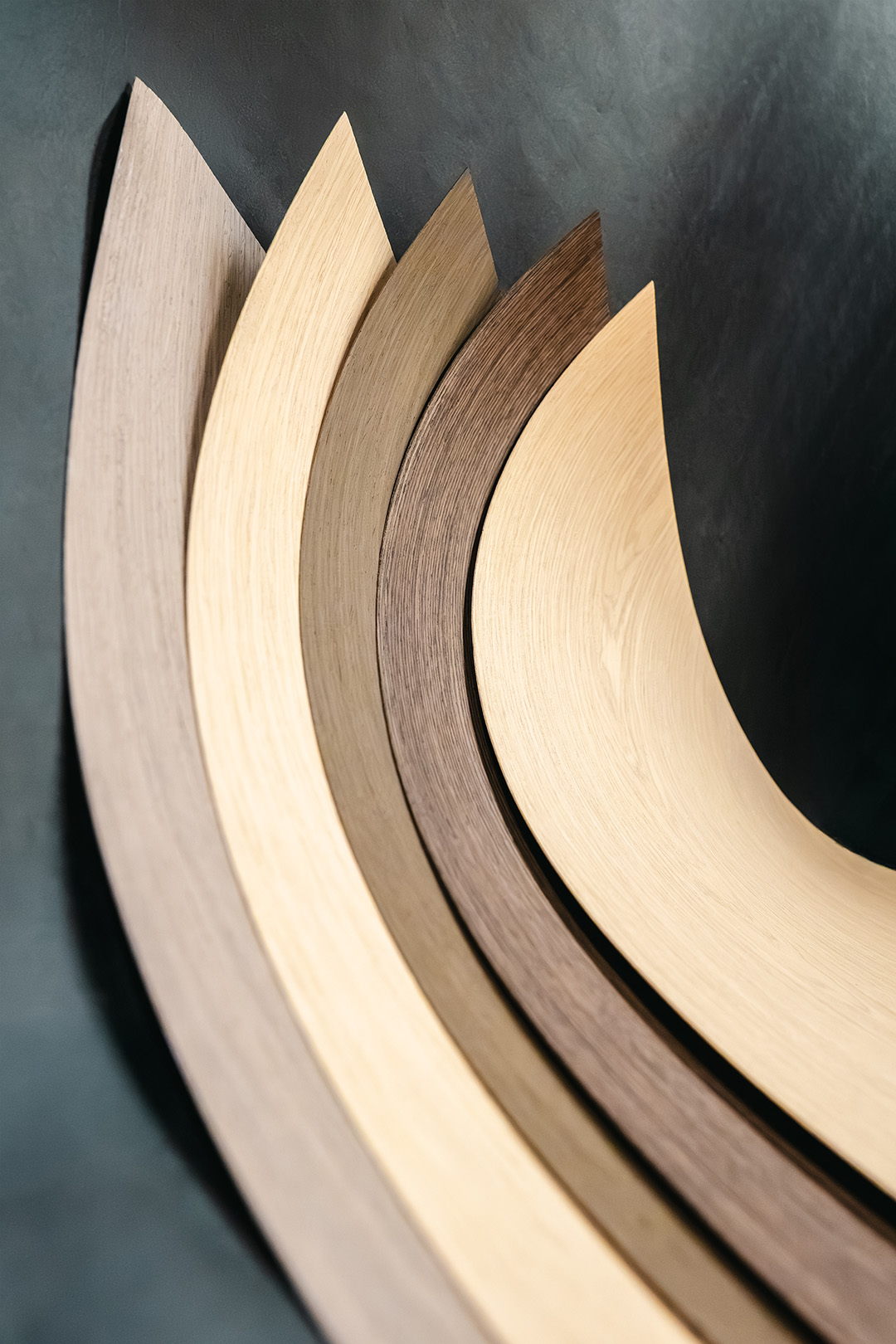
Veneers bring authenticity. Thin slices of real wood provide warmth, texture, and natural variation—especially when paired with stable backers and factory-applied finishes that improve predictability.
Edgebanding is where these surfaces are completed. It protects exposed cores, reinforces durability, and visually ties the entire piece together. Thickness, material choice, and finish all affect how a project wears over time—and how it reads up close.
Each plays a different role. None work alone.

Designed as Systems, Not Parts
Most surface problems aren’t caused by poor materials—they’re caused by mismatched ones.
That’s why Chesapeake focuses on coordinated systems:
- Laminates and veneers with matching edgebanding
- Surface options designed to align in tone and finish
- Backers and edge materials selected for fabrication, not just appearance
When panels, edges, and finishes are designed together, projects move from approval to production with fewer surprises.
Backers, Finishes, and the Details That Matter
A veneer is only as good as what supports it.
An edge is only as strong as how it’s applied.
Our laminate and veneer offerings include paperback and phenolic backers chosen for stability and ease of fabrication. Many lines are also available prefinished, reducing variability and compressing timelines.
Edgebanding options range from machine-applied rolls to thicker, heavy-duty profiles designed for commercial wear—because not every edge sees the same conditions.
These decisions don’t just affect aesthetics. They affect speed, durability, and confidence on the floor.
A Natural Extension of the Chesapeake Standard
Chesapeake has always existed to help makers solve material challenges—especially the ones that don’t show up until later.
By bringing laminates, veneers, and edgebanding together, we’re supporting projects more completely—from early design decisions through fabrication and final inspection.
This isn’t about expanding a catalog. It’s about reducing friction, protecting intent, and helping builders deliver work they’re proud of. Because the best surfaces don’t just look right. They’re finished right.