
What they are, how they differ, and why systems matter.
Laminates (HPL)
Laminates—often referred to as High Pressure Laminate (HPL)—are engineered surfaces made by pressing layers of paper and resin under high heat and pressure.
Their strength is consistency.
Laminates are commonly specified when:
- Durability and wear resistance are critical
- Moisture exposure is a concern
- Large runs require uniform color and finish
Because laminates are manufactured rather than grown, what’s approved in the sample stage is what shows up on every sheet. That predictability makes them a reliable choice for high-traffic commercial environments and repeatable installations.
Veneers (Real Wood)
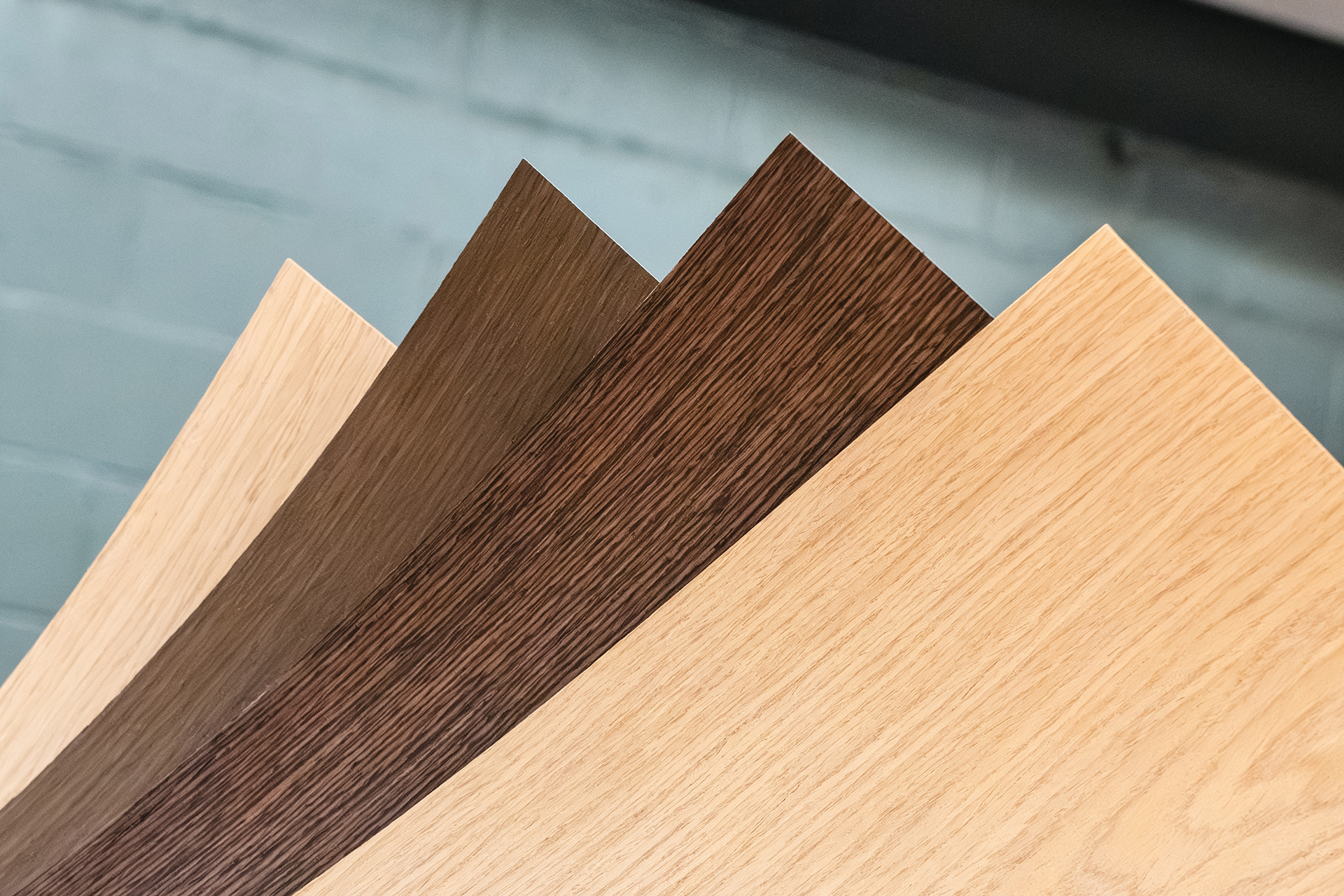
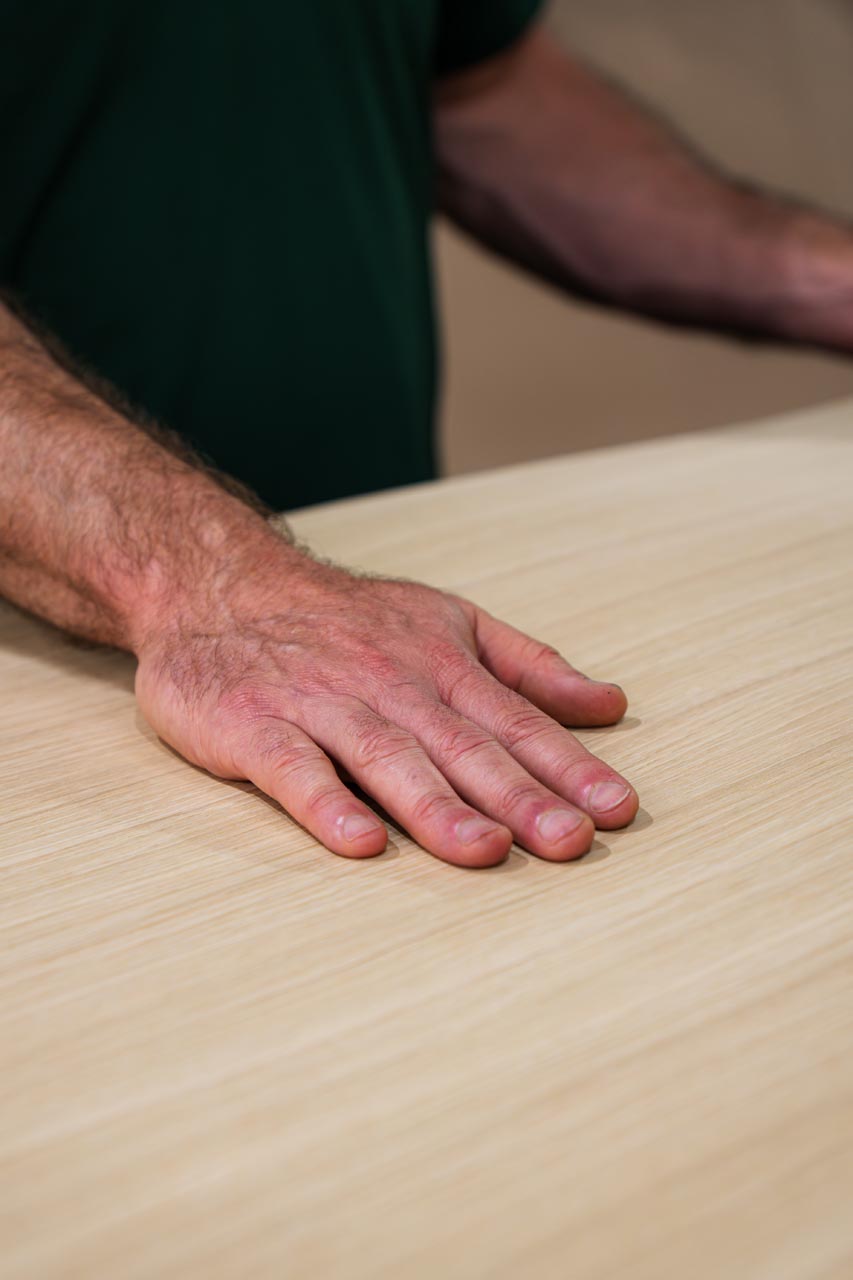
Veneers are thin slices of genuine wood bonded to a stable backer. They bring warmth, depth, and natural variation that only real wood can provide.
Veneers are well suited when:
- Authentic materiality matters
- Grain and texture are part of the design story
- A premium, natural finish is required
Modern veneer construction—paired with paperback or phenolic backers and, in many cases, factory-applied finishes—offers far more consistency and stability than veneers of the past. When specified intentionally, veneers balance character with performance.
Edgebanding
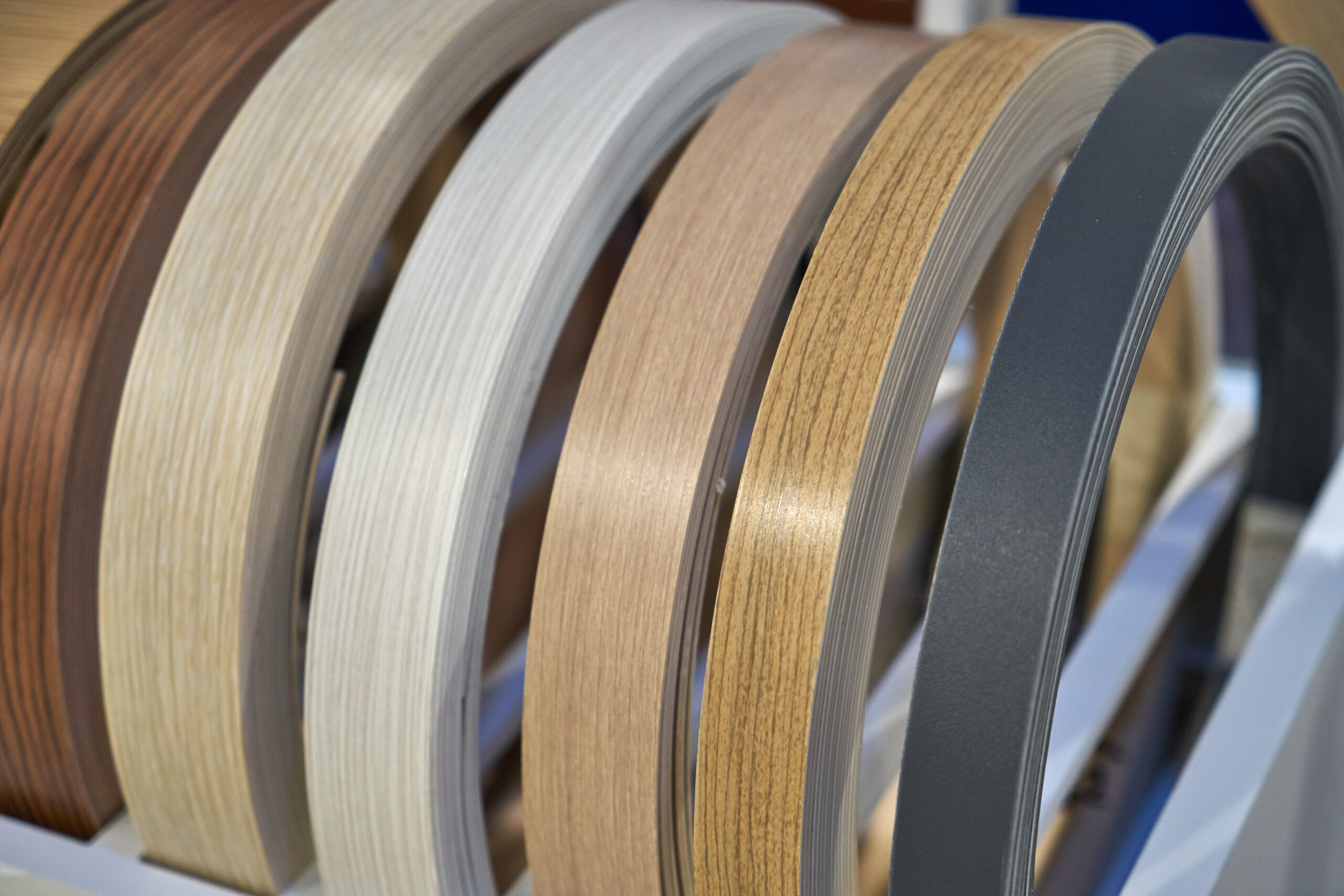
Edgebanding is where surfaces are finished—and where quality is often judged first.
Applied to exposed panel edges, edgebanding:
- Protects the core material
- Reinforces durability
- Visually completes the surface
Material choice, thickness, and finish all matter. Thin edges may suit lightweight or cost-sensitive applications, while thicker or real-wood edges are often chosen for high-wear or furniture-grade work. When edgebanding doesn’t match the surface in tone or performance, the disconnect is immediately noticeable.
Why Systems Matter
Most surface issues don’t come from poor materials.
They come from mismatched ones.
A laminate that performs perfectly can still fall short if the edge doesn’t hold up. A beautiful veneer can lose its impact if the finish or edge tells a different story.
That’s why the strongest projects don’t spec materials in isolation. They choose laminates or veneers intentionally—and pair them with the right edgebanding and backer to match the demands of the space, the fabrication process, and the expected wear.
When panels, surfaces, and edges are designed as a system, projects move faster, look better, and age more gracefully.
The Takeaway
There’s no single “best” surface material—only the right combination for the job at hand.
Understanding the role of laminates, veneers, and edgebanding—and how they work together—helps protect design intent and reduce surprises on the floor.
Design the system, not just the surface.