
Dean Hogan of Decospan on perception, craftsmanship, and why there's no such thing as a defect in veneer.
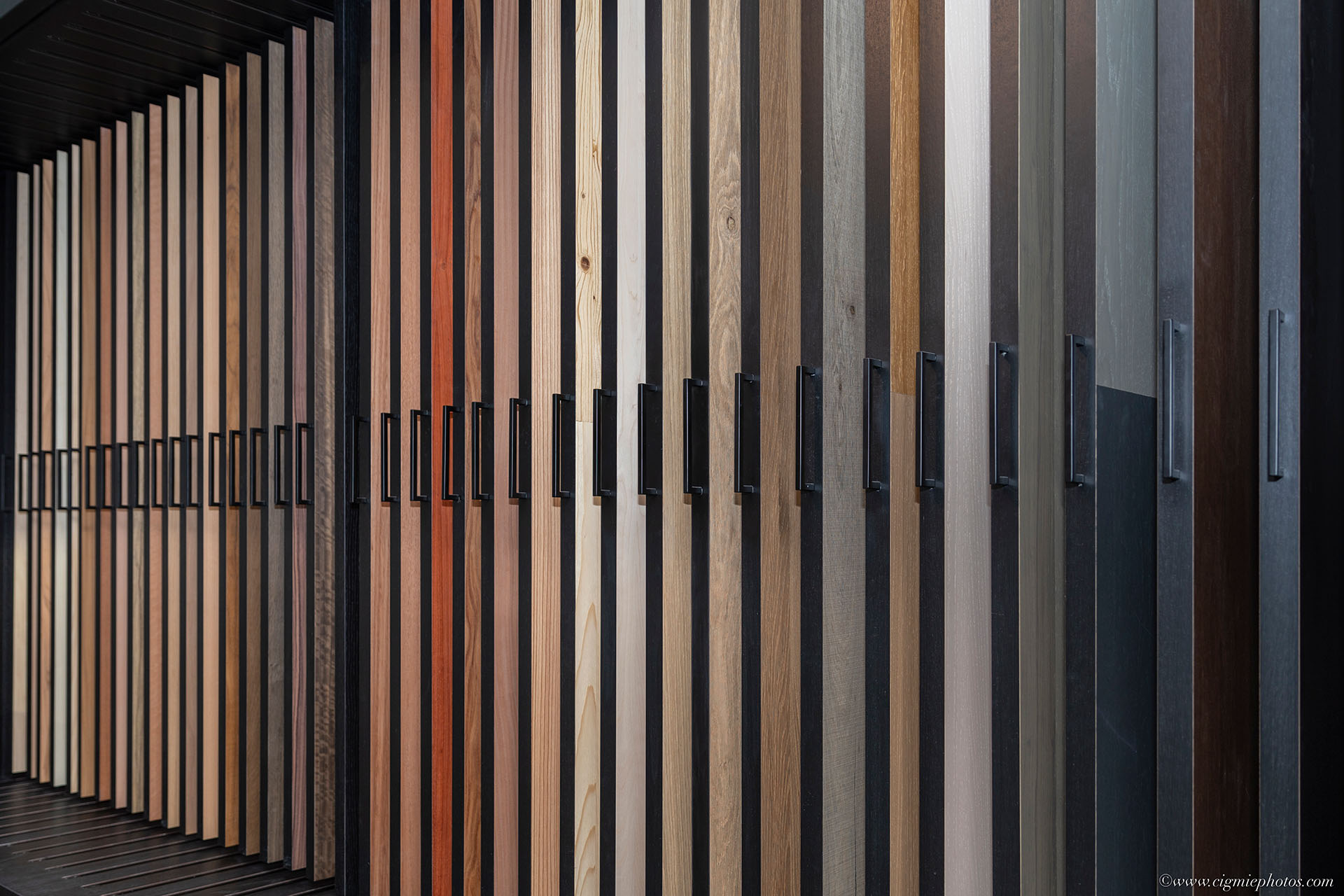

At first glance, a veneer is judged by what’s on the surface.
What most people never see is that the material has a life of its own — shaped by how the tree grew, where it was cut, and how it’s ultimately understood.
It’s a way of seeing the material that Dean Hogan of Decospan — known throughout the industry as “The Veneer King” — has built his career on.
Tell us how you got into this line of work.
I actually didn’t plan to get into veneer at all.
The first time I really noticed wood was when I was a kid. My parents took me to a casino, and I saw this table with what I now know was bird’s eye maple. I remember stopping and thinking, what is that? I knew it was wood, but I’d never seen anything like it.
That stuck with me. I started noticing wood everywhere—millwork, furniture, anything I could find. Back then there was no internet, so I’d just ask people, what is this? Most people didn’t know. But the more I asked, the more I learned.
I was especially drawn to the exotic side—burls, figured maples. That’s what hooked me.
I ended up in logistics first. When I moved to North Carolina, I took a logistics manager role at a veneer company. But I kept talking about wood, and eventually they said, “We’re wasting you in logistics.”
They put me on the floor. I learned grading, splicing, sales—everything. From there, I spent 20 years in the industry before moving to Decospan, where I had to learn a whole new side of things—finishes, panels, cores.
But the constant through all of it has been relationships. In this industry, that’s everything.
You’ve been called “The Veneer King.” How did that come about?
That’s a funny one.
I’m the guy people come to with questions. They’ll send me pictures—“What is this? What’s wrong with this match? How do we fix it?” And I’ll break it down for them.
One of my colleagues started an Instagram for me and said, “You’re the Veneer King now.” It just stuck.
Some customers call me “The OG,” too. I guess it comes from spending a long time in it and really caring about the material.
What separates average veneer from exceptional veneer?
I actually don’t like to think about it as average versus exceptional.
Veneer has character. There are no defects in veneer—only people’s perception of what they’re looking at.
Grading is just a set of expectations. What’s allowed, what’s not allowed. But for me, it’s about understanding what you’re seeing and where it fits.
One person looks at a sheet and says, “That’s beautiful.” Another says, “Why are there knots?” But those knots are part of how the tree grew. When you explain that, it changes how people see it.
There’s a place for every piece of veneer. It’s just about using it the right way.
“There are no defects in veneer—only perception.”
What does seeing the raw log change in how you think about veneer?
Everything.
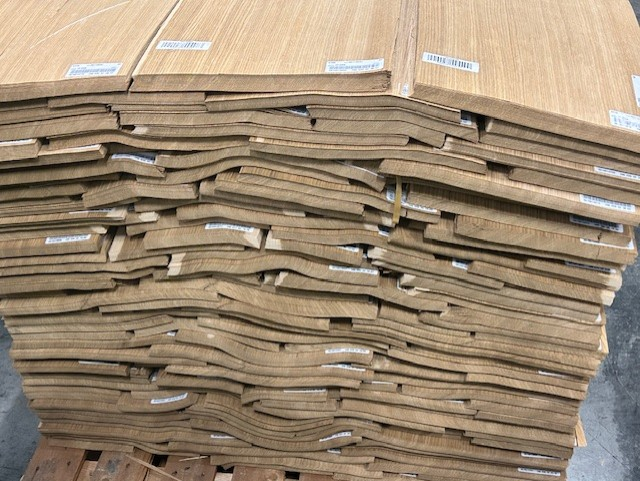
When you look at a log, you start to understand what’s actually inside it. People ask for A-grade veneer all the time, but only about 5% of a log will give you that.
The rest of the tree still has value—it just needs to be used properly.
When I see a log, I’m already thinking about where it’s going to end up. I can picture it in a hotel, an office, a home. I’ve had moments where I see a log and immediately know the project it belongs to.
That’s when it becomes more than material—it becomes application.
“Only about 5% of a log makes A-grade.”
What does veneer allow you to do that other materials can’t?
There’s a lot of competition from melamine and TFL. They’re always trying to look like real wood.
But veneer is real. It’s renewable. It grows. It changes.
And there’s something you can’t fake—how it feels.
You walk into a space full of synthetic materials, and it feels cold. You replace that with veneer, and suddenly it feels warm. It feels human. You feel more relaxed in that space.
That’s hard to quantify, but everyone feels it.
“There’s a place for every piece of veneer.”
Decospan operates at a global scale—how does that shape how you think about sourcing and quality?
At Decospan, we use the whole log. Every piece has a purpose.
Where others might reject large portions of a log, we find ways to use it—whether that’s in veneer faces, panels, or flooring. Nothing goes to waste.
That’s a big part of how we think about both sustainability and value.
How do you balance natural variation with the need for consistency?
That’s one of the biggest challenges with wood.
Even within a single log, you can have multiple shades. What we do is batch veneer by color. We group similar tones together and build panels from those batches.
So instead of fighting variation, we control it.
That’s what gives consistency across a project.
Where do you see projects go wrong when veneer is specified?
Most of the time, it’s trying to save money upfront—and then paying for it later.
People try to save 10% on material, and it ends up costing far more down the line. You get color inconsistency, matching issues, finishing problems—and by the time you see it, it’s too late.
You’re ripping it out and starting again.
What’s one decision in veneer selection that has the biggest downstream impact on a project?
Color consistency.
If you don’t control that upfront, everything becomes harder—finishing, matching, installation. It affects the entire outcome.
Real craftsmanship shows up in those details. The things most people don’t notice—but they feel.
Veneer will expose you if you cut corners.
“Veneer will expose you if you cut corners.”
Where do you see veneer heading over the next decade?
Sourcing is going to be a challenge. Demand is growing, but supply isn’t keeping up the way it used to.
Costs are rising. Quality is harder to maintain in some regions. That’s going to shape the industry.
In terms of trends, white oak has been dominant for a long time, but walnut is coming back strong. And we’re also seeing a return to species that were popular years ago—mahogany, cherry. What was old is new again.
Final thought—what does great craftsmanship look like to you?
Craftsmanship is about understanding the material and respecting it all the way through the process.
“Craftsmanship is about understanding the material and respecting it all the way through the process.”