Concrete Under Pressure: Stadiums, Deadlines, and the Discipline of Detail
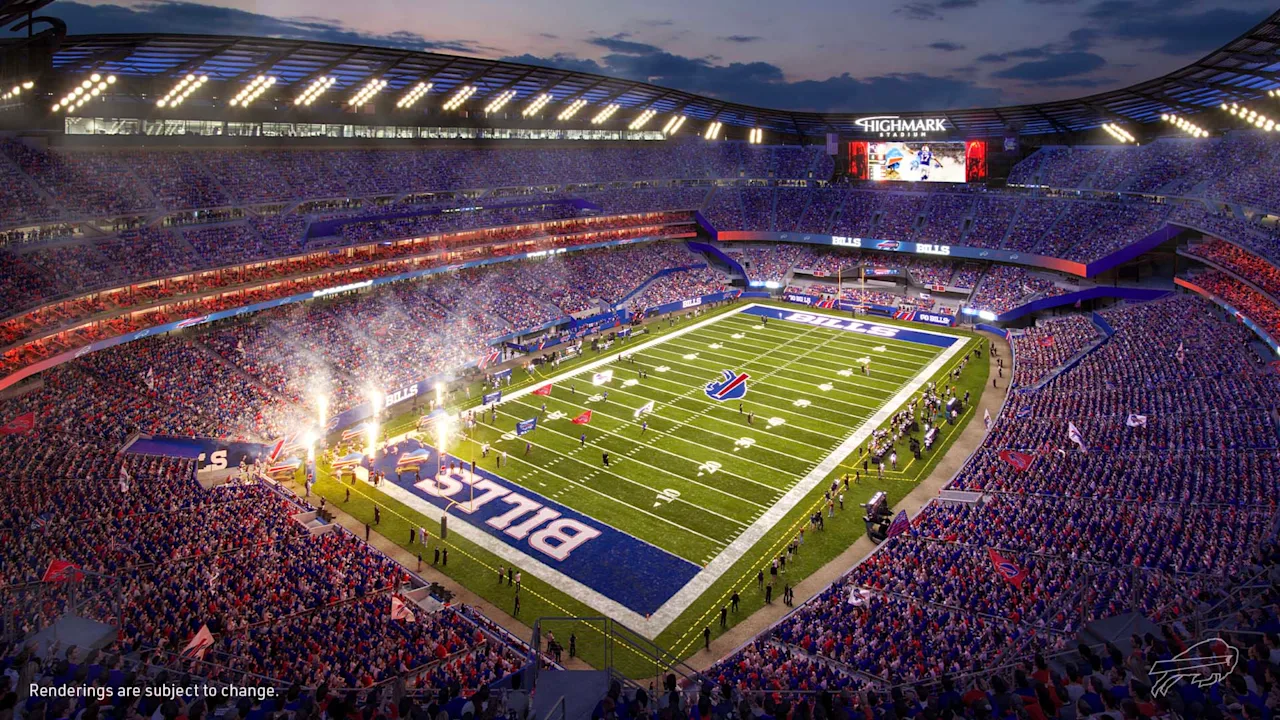

When a new NFL stadium opens, the lights come on, the crowd fills in, and the season begins.
What most people never see is the discipline behind the facade — sometimes measured in one-sixteenth of an inch.
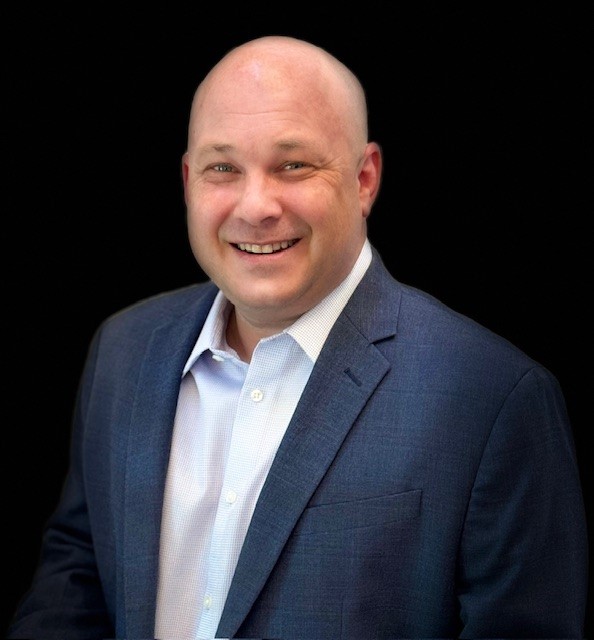
We spoke with William A. Adams of High Concrete about architectural roots, immovable deadlines, supplier relationships, and the level of detail required to deliver when there’s no margin for error.
Tell us your name, title, and how you got into this line of work.
I’m William Adams. I’ve been in the supply chain department at High Concrete in Denver, Pennsylvania for nearly eight years. I’m a Pennsylvania native, and before joining High Concrete I spent about 17 years in architectural design and high-end custom cabinetry.
The transition into precast concrete felt natural. I’ve always been interested in architecture and how buildings come together. The terminology, the coordination, the way different systems interact — that was familiar territory for me.
That interest in building has always been there.
For those unfamiliar, what does High Concrete do?
We manufacture precast concrete components — primarily wall panels and parking structures. In the Northeast, especially in urban areas, there’s a big demand for vertical construction. That means parking garages, mixed-use developments, building facades.
No two projects are identical. We’ll have multiple jobs running through production at the same time, and each one has its own set of details. Everyone involved needs to understand what’s unique about that project to keep things aligned.
It’s a busy environment, and it requires coordination.
When someone asks what you do, how do you describe your role?
I usually say I support building projects that are all different from one another.
I’m not out on the jobsite installing panels, but I need to understand what’s happening in production, what materials are required, what the engineering specifications are, and how everything ties together.
There’s a lot of internal discussion and planning behind each project. Understanding the details is really the key.
“When the deadline doesn’t move, the process has to be disciplined.”
The Buffalo Bills Stadium
Tell us about the Buffalo Bills project.
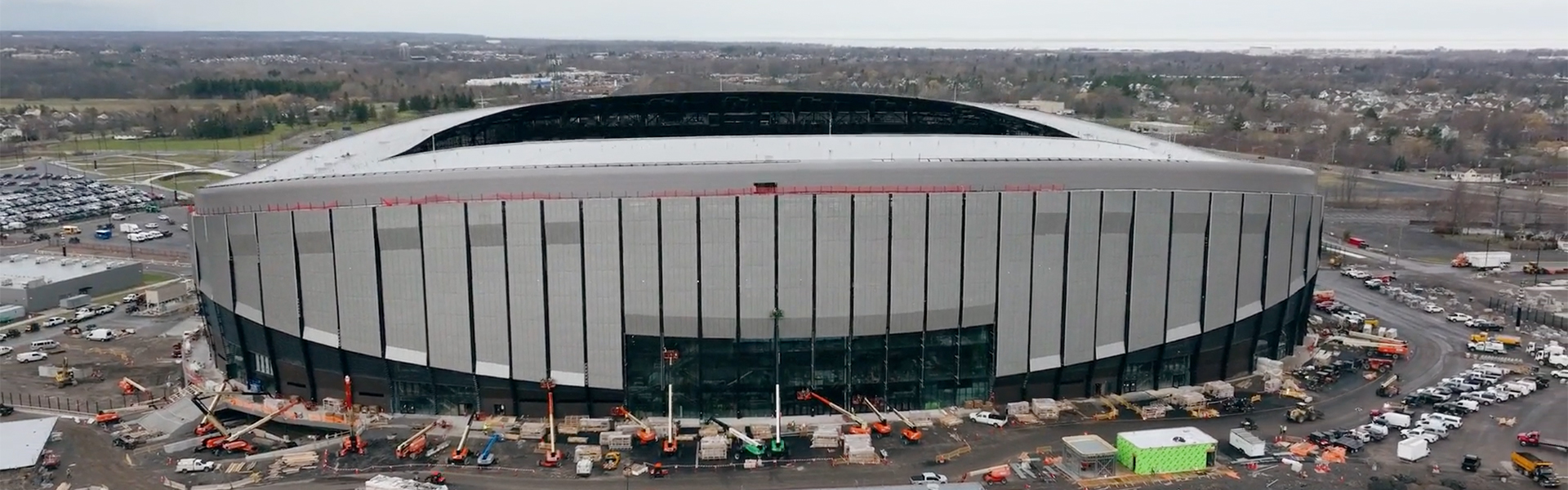
The Buffalo Bills are building a new stadium that’s scheduled to open for the 2026 NFL season. That deadline doesn’t move. If it’s not ready, that’s a problem.
Our team is fabricating the facade panels for the stadium. These are precast concrete panels with embedded thin brick — about one inch thick — but once it’s embedded, it has the appearance of full-depth brick.
The brick itself has an iridescent quality, so in sunlight it has a reflective look. The panels are also sloped and curved. They’re not installed at a 90-degree angle to the ground. Because of that, there was testing involved to make sure the panels could be anchored properly with the steel.
It’s a unique design, and there’s no room for error.
What challenges did you encounter on that project?
One of the early issues was brick tolerance.
There’s a tolerance of plus zero, minus one-sixteenth of an inch. If the brick is undersized, it won’t sit properly in the rubber liner before we pour the concrete. When the concrete goes in, the brick can shift. If that happens, it has to be replaced.
We identified a dimensional issue early. The supplier came down within 24 hours, confirmed the problem, and replaced 14 or 15 skids of brick. We were instructed to dispose of the original material.
Because it was caught early, we were able to mitigate the impact.
“When you’re working with tolerances that tight, you have to catch problems early.”
On Suppliers and Staying Ahead
What makes a strong supplier relationship?
Price is always a factor, but it’s not the only factor.
For example, we use a lot of wood products to form our concrete panels. Every wall is formed with wood. Depending on the application, we’ll use phenolic-faced panels, finish-grade materials with resin overlays, and different types of forming systems.
We source a significant amount of that from Chesapeake. They allow us to negotiate short-term truckload agreements — usually about two months of supply at a time. I stay ahead of that. We negotiate the next truckload well before we run out so there’s overlap. That helps avoid disruptions.
We’ve never had performance issues with their material. That reliability matters.
“You can’t wait until you’re out of material. You have to stay ahead.”
Have external events affected your work?
Definitely.
During COVID, some of the material we use from Europe was difficult to get into the U.S. More recently, the tragic collapse of the Francis Scott Key Bridge near the Port of Baltimore disrupted shipping routes.
Those things are outside your control. You adjust. You reroute. You work with your suppliers to find solutions.
Staying proactive makes a difference.
What Most People Don’t See
What’s something about your work that people might not appreciate?
The amount of detail involved.
From the outside, people might think it’s straightforward — fabricate a panel, ship it, install it. But there’s a lot of internal coordination and discussion behind each job.
Each project has its own specifications, its own timeline, its own constraints. Understanding all of that takes time.
It’s not just ordering material. It’s understanding how that material fits into a much larger system.
High Concrete employs roughly 300 people. We have a strong quality control process. Raw materials are inspected. Final products are inspected. There are steel requirements and structural standards that have to be met.
There’s also a culture of collaboration here. People are open to asking questions and helping one another find answers.
You can’t approach projects of this scale casually. A lot is at stake.
Sustainability and What’s Ahead
What excites you about the future of the industry?
We’re experimenting with sustainability initiatives.
One example is using recycled ground glass as a partial replacement for sand in concrete. The glass comes from urban recycling streams and is processed down to a usable aggregate.
We’re also testing hemp-based aggregate — hempcrete — as part of our mix design. That’s still in the experimental phase, but it’s interesting to explore materials that can reduce environmental impact while still meeting structural standards.
Data centers are also a major trend right now, particularly in the Northeast. There’s a lot of demand there, along with continued work in parking structures and urban housing.
Precast construction lends itself well to that demand because components can be fabricated in a controlled environment and transported to the site for assembly.
It’s essentially built like a puzzle.
Where would you like to see the industry go long term?
I’d like to see continued progress in using recycled and renewable materials without compromising structural integrity.
We’re going to need more buildings — more infrastructure, more housing, more data centers. The question is how responsibly we build them.
If we can continue to improve sustainability while maintaining standards, that’s a positive direction.
When the stadium opens in 2026, fans will see sweeping curves and reflective brick catching the light.
What they won’t see is the supply chain discipline behind it — the tolerance checks, the early problem-solving, the coordination across teams.
That’s the quiet work of setting the standard.