
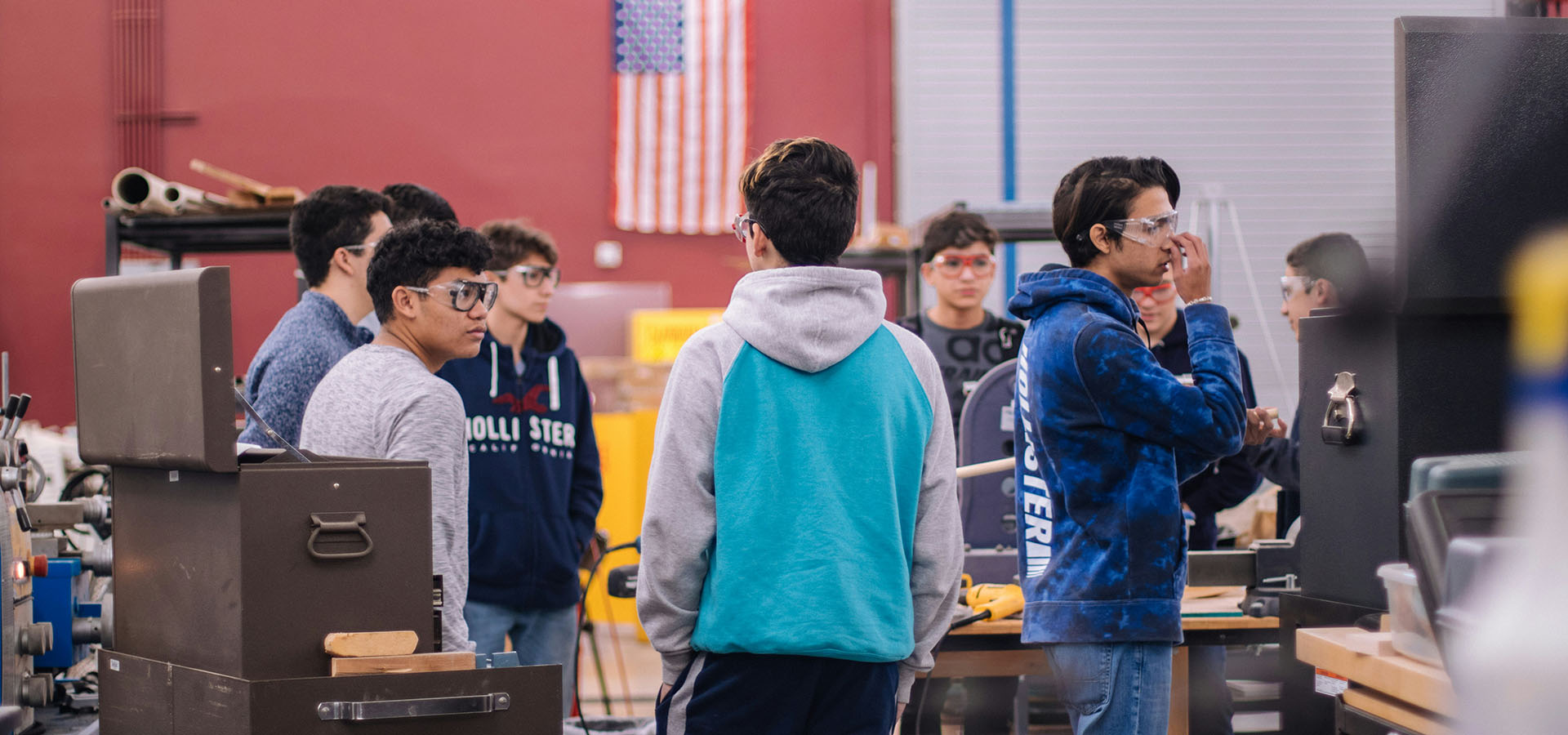
Young people are struggling to find work. Manufacturers are struggling to find skilled people. Shop class could help close the gap.

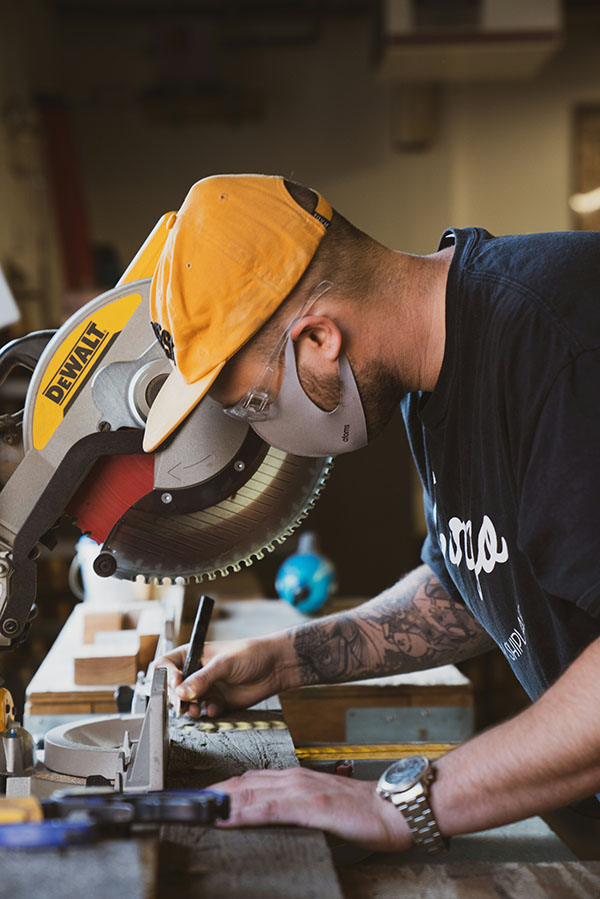
There is a strange contradiction in the American workforce right now.
Young people are entering a difficult early-career job market. In July 2026, unemployment among Americans ages 16 to 24 was 9.1 percent. Among recent college graduates, unemployment was about 5.6 percent in the second quarter of 2026, while roughly 42 percent were underemployed, meaning they were working in jobs that typically do not require a college degree. Handshake, which tracks the early-career market, reports that job postings for the Class of 2026 are 12 percent below pre-pandemic levels.
At the same time, industries that make and build things are asking a very different question: where are the people? Manufacturing could need as many as 3.8 million additional workers between 2024 and 2033. Without significant changes to the talent pipeline, Deloitte and The Manufacturing Institute estimate that 1.9 million of those positions could go unfilled.
Both things can be true. Young people can struggle to find opportunity while good industries struggle to find young people.
The problem may start much earlier than the job posting.
You can’t choose a career you never see
Across our Meet the Maker conversations, one theme keeps surfacing: the woodworking industry has a visibility problem.
Jamie Shull of Roseburg sees experienced people retiring across mills, distribution, trucking, sales and manufacturing without another generation entering at the same rate. She described hearing of a “20-year gap” in the industry, with too few people behind the generation now approaching retirement. Her conclusion is simple: “Young people can’t choose something they never see.”
Her own son wanted to take wood shop in high school. His school did not offer it.
That small story says a lot. For decades, the path presented to many American students became increasingly narrow: perform academically, attend a four-year college, earn a degree, then enter professional work. There is nothing wrong with that path. It remains the right one for millions of people. The problem comes when it is presented as the only path, while many of the other ways people discover what they are good at become less visible.
National education data reflects some of that shift. Public high school graduates earned an average of 3.13 career and technical education credits in 1992. By 2013, that had fallen to 2.60 credits, recovering somewhat to 2.83 by 2019.
For woodworking, the consequence is straightforward. If a student never walks into a shop, never operates a tool, never sees a CNC machine run, never reads a drawing and never turns a piece of material into something real, when exactly are they supposed to discover that they might be good at it?
Shop class was never just about shop
Doug Hague, CEO of the Architectural Woodwork Institute, traces his own career back to a high school woodworking class. He later studied wood technology, worked in commercial manufacturing, taught woodworking at the university level and eventually became CEO of the industry association responsible for architectural woodwork standards.
What attracted him in the first place was not simply wood. “Woodworking takes math and science and makes them practical,” Hague says.
That may be the more important argument for shop class. Hands-on education gives abstract knowledge somewhere to go. Geometry becomes a cut. Chemistry becomes an adhesive or finish. Measurement has consequences. A mistake does not produce a red mark on a page; it produces two parts that do not fit together.
Students learn planning, sequencing, patience, spatial reasoning, problem solving and attention to detail. At the end, there is also something sitting on the bench that did not exist before. For some students, that moment changes the way they understand themselves. They are not simply learning how to build a cabinet. They are discovering that they can build.
The 15-year talent pipeline
There is another reason early exposure matters, and it may be the most urgent one for the industry: some of these skills take a very long time to develop.
Isaac Bokros, CEO of architectural millwork manufacturer USAM DC, sees that reality on his shop floor. The fundamentals can be taught. Equipment can be learned. Training programs can accelerate development. But the judgment accumulated through years of making, solving problems and seeing thousands of different situations cannot simply be compressed.
As Bokros puts it: “You have to build bench depth over time.”
He points to experienced people who have spent 15 years working at a bench. A six-month training program cannot reproduce that accumulated skill. The lesson is important because it changes how we should think about the talent shortage. There is a long conveyor belt between a young person first encountering the craft and that same person becoming the highly skilled millworker, machinist, engineer, production leader or mentor a company depends on years later.
If too few people are stepping onto that conveyor belt today, the consequences may not become fully visible for another decade. Once they do, they cannot be fixed with a hiring push.
You cannot hire 15 years of experience tomorrow.
The skilled workers the industry will need in the 2030s and 2040s are beginning, or not beginning, that journey now. Shop class, career and technical education, internships, apprenticeships and plant tours are therefore more than educational extras. They are the front end of a workforce pipeline that takes years to produce its most experienced people.
This is not the shop class people remember
Part of the challenge may be the image that still surrounds vocational education. Modern woodworking bears little resemblance to the idea of shop class as a fallback for students who were not considered academic.
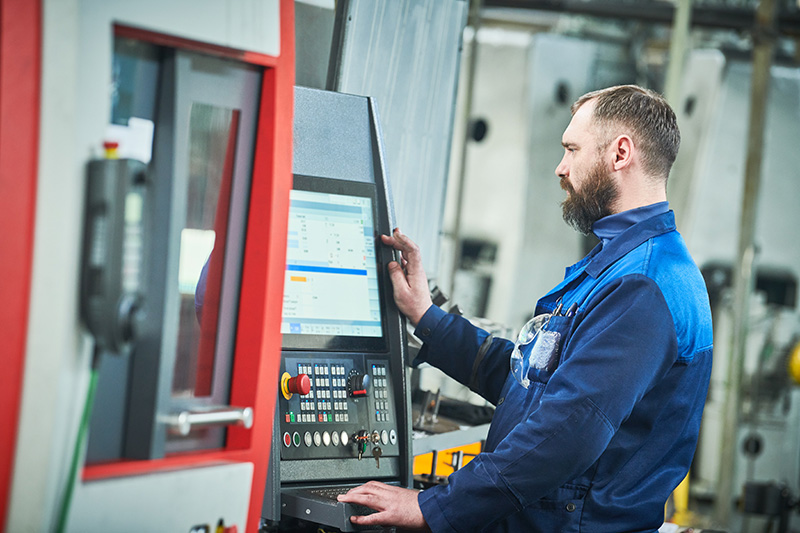
Commercial shops increasingly combine CNC routers, automated saws, CAD and CAM software, digital estimating, sophisticated finishing systems and highly engineered materials with the hand skills that have always defined the craft. Hague sees enormous opportunity in that combination. Young people are comfortable with technology, and woodworking gives them a chance to connect digital skills with physical outcomes. A student can design something on a screen and then watch a machine turn that information into a real component.
That is not an alternative to technology. It is applied technology.
And it leads to a much broader set of careers than most people outside the industry realize. Architectural woodworking companies need estimators, engineers, project managers, draftspeople, CNC programmers, production leaders, purchasers, finishers, installers and operators. As Hague puts it, “Woodworking is a system, not a single role.”
Exposure to making can be the entrance to any number of them.
The industry has an awareness problem
Bokros sees the same disconnect in architectural millwork. His company produces the work people encounter in hotels, offices, healthcare spaces and commercial interiors every day: reception desks, wall paneling, custom casework and countless details most people never stop to think about.
That invisibility extends to the careers behind them.
Most students will never see the drawings, engineering, programming, material selection, fabrication, finishing and installation behind a finished interior unless somebody deliberately shows them. That is why internships, career and technical education partnerships, Manufacturing Day tours and other forms of industry exposure matter. Career awareness rarely begins with a job advertisement. It begins with contact: a teacher, a class, a parent, a plant tour, a summer job, or someone allowing a student to stand beside a machine and ask what it does.
One experience can suddenly make an entire industry visible.
There is something else young workers need: proximity
The difficult early-career job market adds another dimension to this conversation. Much has been written about AI eliminating entry-level work, but research from the Federal Reserve Bank of New York points to another issue: remote work appears to have made it harder for employers to train and mentor inexperienced employees. The researchers found that workers receive more feedback and mentorship when they work alongside colleagues, with younger workers particularly affected by the loss of that proximity.
There is an interesting parallel with the skilled trades, where learning has always depended heavily on proximity. You work beside somebody. You watch how an experienced person approaches a problem. Someone catches the mistake before you make it. You ask a question because the person who knows the answer is standing six feet away. Knowledge moves from one generation to another through observation, repetition and correction.
Technology will continue changing manufacturing. AI will improve estimating, administration, engineering, scheduling and countless other processes. Automation will make production faster and more precise. But the people closest to highly customized manufacturing do not necessarily see technology and craft as opposites.
Jeff Held, CEO of Century Stair, describes his company as automating wherever it makes sense, including cutting, staging, design and CNC, so skilled builders can focus more of their time on assembly, quality, fit and finish. His summary is concise: “Automation supports the craft. It doesn’t replace it.”
Bokros makes a similar point about custom architectural millwork. Complex assemblies involving multiple materials, finishes and site-specific conditions still require human judgment. The tools will change. The need to develop experienced people who know how to use them will remain.
A talent pipeline starts years before the hire
Industry often talks about the “skills gap” as though the problem appears when an employer posts an opening and cannot find a qualified applicant.
By then, it may already be too late.
A skilled workforce is the product of thousands of earlier decisions: which programs schools fund, which electives students can take, whether teachers have modern equipment, whether manufacturers open their doors, whether parents understand the careers available, whether internships exist, and whether young people can see a progression from beginner to technician, craftsperson, engineer, project manager or business owner.
Manufacturers have responsibilities too. The industry cannot simply ask schools to create a workforce for it. Companies have to pay competitively, create workplaces people want to join, invest in training, make career progression visible and give experienced employees the time and responsibility to teach the people coming behind them.
Nor does any of this require turning the conversation into college versus the trades. A modern wood products career might begin with an apprenticeship, certificate, associate degree or bachelor’s degree. For many roles, continuing education is increasingly important. The point is not to narrow young people’s choices in a different direction.
It is to broaden them.
Give people the chance to discover the work
There will not be a single solution to the talent shortage. But before a person can become interested in a career, that career has to become visible.
At a moment when many young people are questioning where they fit in the working world, there is an opportunity here. Not to tell an entire generation that they should become woodworkers, machinists or manufacturers, but to make sure those paths are visible enough that they can make the choice for themselves.
That means getting students into shops. It means putting modern equipment in front of them. It means showing them the technology alongside the craftsmanship, the office alongside the production floor, and the progression from the person learning at the bench today to the person everyone turns to for answers 15 years from now.
Before the industry asks where the next generation went, it is worth asking whether we ever showed them the door.
Because the industry’s future bench strength is being built, or not built, right now.