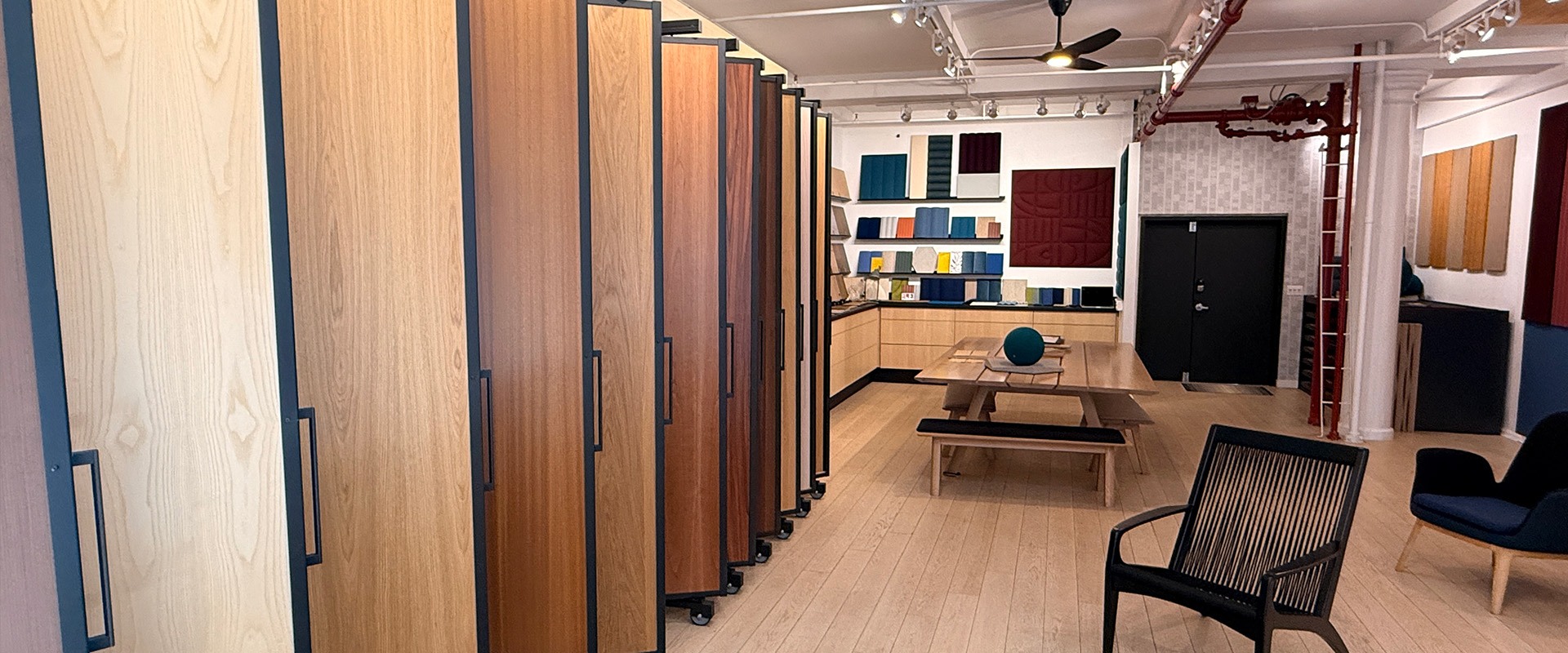
On materials, modern interiors, and why the best design decisions still come down to people


Every material tells a story—but not every material makes it into a built space.
For over two decades, Jennifer Daly has worked at the intersection of design, manufacturing, and specification—helping architects and designers navigate the gap between concept and reality. As Principal of Robin Reigi, she’s built a career on understanding what materials can do, and just as importantly, what they can’t.
In this conversation, she shares how the industry has evolved, what designers are asking for today, and why—despite all the technology—good decisions still rely on human judgment.
How did you get into this line of work?
I didn’t have a moment where I thought, “this is what I want to do.” I came into it through architecture. I was working at a hospitality firm in the early 2000s, and there was this huge push toward new materials—designers were looking for things no one had seen before.
That’s how I met Robin. She came from art fabrication, working with cast resin—literally making physical models for advertising. Back then, everything was handmade. No CGI. There was a whole network of shops in Brooklyn doing this work.
We saw an opportunity to bring that material into architecture—and that became the foundation of the business.
For those who may not be familiar, what does a spec rep actually do?
To most people, I say we sell interior finishes to architects and designers. That’s the simplest version.
But the reality is more nuanced. Sometimes we’re buying and reselling materials. Sometimes we’re acting as commissioned sales reps. And a lot of the time, we’re helping translate design intent into something that can actually be built.
Because it’s not just about aesthetics—it’s technical requirements, logistics, pricing, timelines. All of those things have to line up for a material to work in a real project.
What’s the biggest shift you’re seeing in design right now?
The biggest one is the softening of spaces.
Workplace design has moved toward hospitality. Hospitality has moved toward residential. Everything is becoming more human—more comfortable, more welcoming.
You see it in rounded forms, softer materials, more natural light, more plants. There’s a lot of talk about biomorphism, but really it’s about how people feel in a space.
There used to be this idea that a workplace had to look like a workplace. That binary is gone.
“Workplace became hospitality. Hospitality became residential. Everything is becoming more human.”
What’s driving that shift?
Part of it is simply seeing what works. Over time, clients saw that these more human environments were successful—and once that happens enough times, it becomes the expectation.
At the same time, sustainability has evolved. It’s no longer just a checkbox—it’s about understanding the full chain of inputs behind a material.
Even something simple can have dozens of components sourced globally. Following those threads and understanding them—that’s where the real work is now.
How do you discover and select new materials?
We don’t go looking—we’re found.
Manufacturers come to us because of our network. And we’re very selective—we probably accept less than 10% of what we see.
The criteria are straightforward. First: is it beautiful?
Then everything else—price point, availability, distribution, sustainability, certifications. It all has to work together.
“The criteria are straightforward. First: is it beautiful?”
Where are you seeing real innovation right now?
It’s in the combination of craft and industry.
You have large-scale manufacturing processes—but the materials that stand out are the ones where some level of human craftsmanship is still involved.
That might be subtle. But you can see it. And it elevates the material.
“When you introduce human craftsmanship into an industrial process, you elevate the material.”
What’s still missing from the material lineup?
Seamlessness.
There are always constraints—manufacturing sizes, shipping limitations, getting materials into a building. And then you’re joining pieces together.
That challenge never really goes away.
Interestingly, designers are starting to embrace those constraints—using mismatches or seams as part of the design instead of trying to hide them. Using different but complementary materials next to each other. It’s a more maximalist approach and it showcases a designers’ expertise when done well.
Has technology changed how designers work?
Completely.
When I started, designers would take a small sample and just hope it worked. Now they have access to endless imagery, renderings, and references.
Social platforms have accelerated learning. Designers can see more, understand more, and make better decisions faster.
How are global shifts affecting the industry?
We’ve been through a lot—recessions, pandemics, supply chain disruptions.
Right now, I’m seeing price increases across the board. But also acceptance. People understand that this is the environment we’re in.
There’s less panic now. More realism.
Do you see AI playing a role in the future?
It already is, in small ways—content, communication, workflows. But the bigger question is what it does to people.
Will firms hire fewer designers and expect more output? Or will it improve their quality of life? That’s what matters.
Because this industry is still built on relationships. Designers want to meet, talk, and solve problems together. That doesn’t go away.
“This industry is still human. People want connection, conversation, and problem-solving together.”
After everything you’ve seen—what actually separates good design from the rest?
Good decision-making.
Everything else—faster communication, better tools, more access—that’s all in service of that.
The things that should be fast are getting faster. So the decisions that matter can take the time they need.