Founder John Emden on 25 years, service, family, and the standard that still guides Chesapeake.
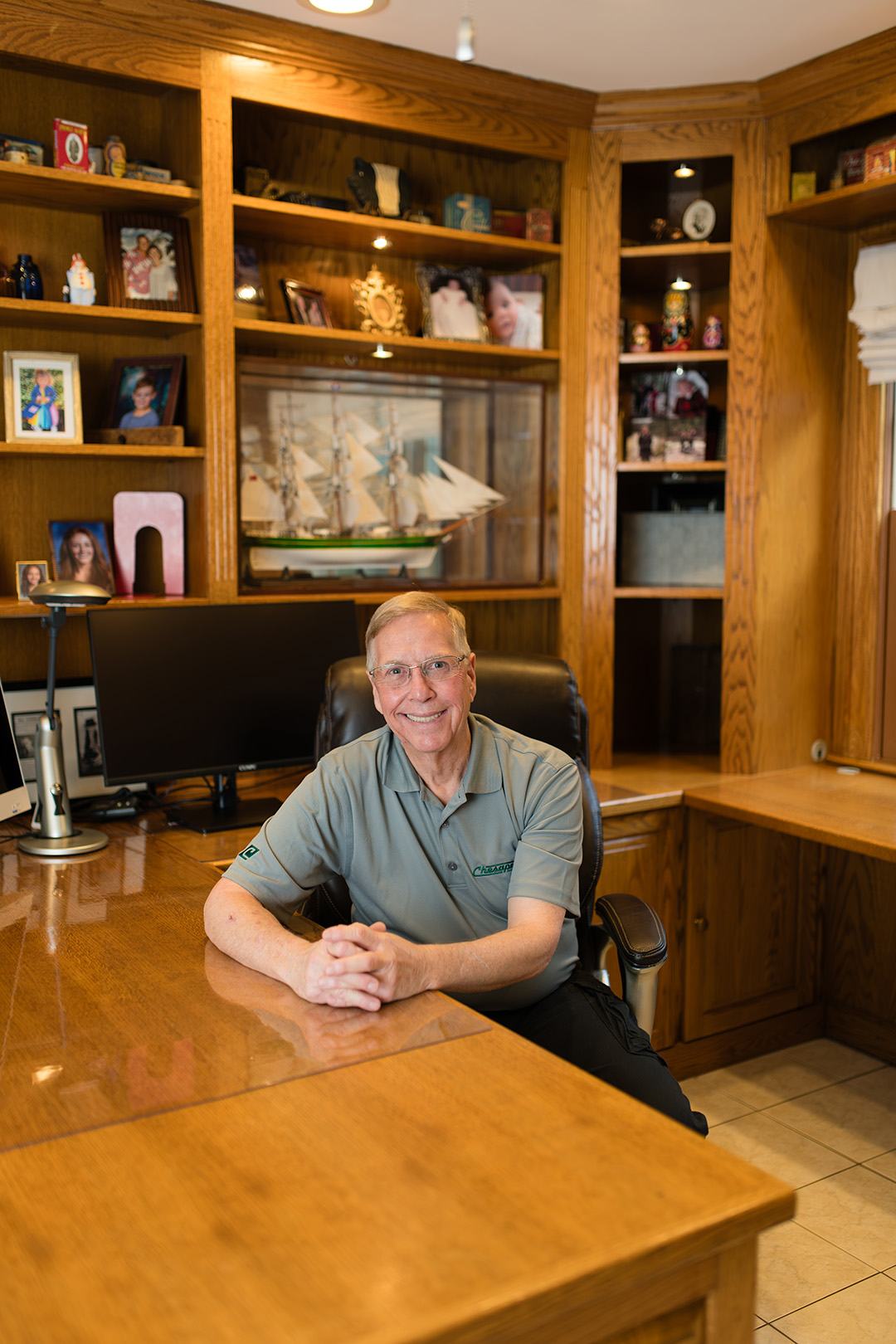
For John Emden, Chesapeake Plywood started with a simple understanding.
There were customers who needed specialty wood products, and not enough suppliers willing to serve them the right way.
In 2001, he took the leap. He mortgaged what he could, bought truckloads of wood, rented space in South Baltimore, and began building the company from the ground up.
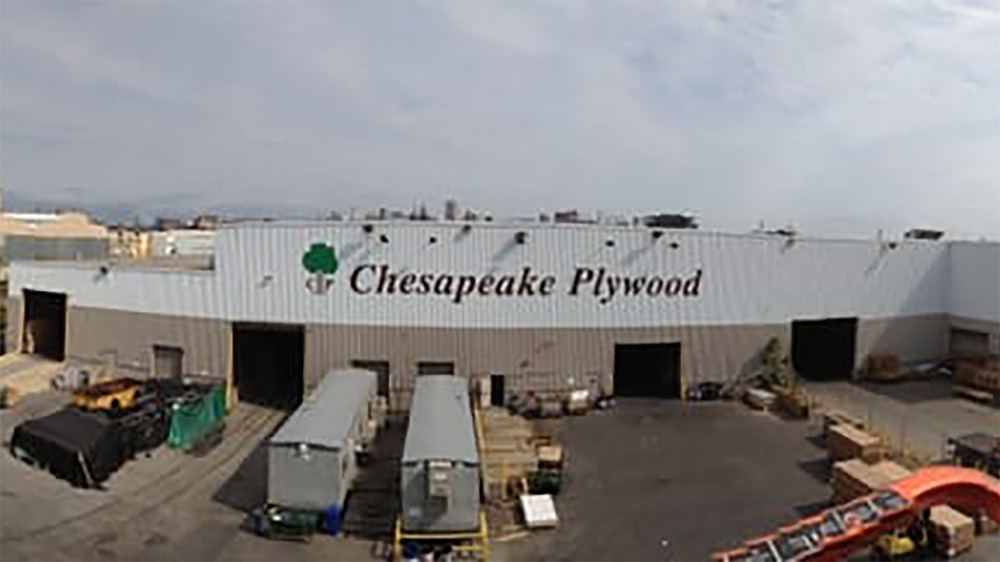
The first office was little more than a lunchroom and a bathroom inside a warehouse. Later came the construction trailers. Then more customers, more products, more space, more services, and eventually the East Biddle Street facility Chesapeake still calls home.
Nearly 25 years later, John is no longer involved in the day-to-day business. His son, Jeff Emden, now leads Chesapeake, carrying the company into its next chapter with new systems, new technology, and the same commitment to service that shaped the company from the start.
But the story of Chesapeake is still rooted in John’s original bet: that customers would value a supplier who listened closely, stocked what others would not, stood behind the product, and treated relationships as the foundation of the business.
We spoke with John about his path into wood products, the early days of Chesapeake, the lessons that shaped the company, and what he hopes Chesapeake never loses.
First, congratulations on 25 years of Chesapeake Plywood. How does it feel?
It’s hard to believe it has been 25 years, to be frank with you.
Especially because six years ago, I handed the business to Jeff, and I’m really not involved at all anymore. I’ve been in the building one time in six years, for two hours. That’s how little I have to do with it today.
Jeff and his staff have done a fantastic job of bringing it where it is today, and hopefully well beyond in the future.
Going back to the beginning, how did you find your way into wood products?
Growing up and through college, there were basically two things I always liked. One was business. Sales specifically. My father was a salesman. The other was aviation.
Through my college days, I was more interested in flying than I was in business. I got my pilot’s license. I even bought an airplane.
But the timing wasn’t right for becoming a commercial pilot. The Vietnam War was just ending. We were in a recession. Airlines had thousands of pilots on furlough, and there were tens of thousands of military pilots coming out of the service. It just wasn’t practical to go down that road.
So I decided I needed to do something else.
I knew I wanted to be in wood products, but I didn’t really know what that meant yet. Forest products can mean a lot of things: paper, packaging, pulp, tree nurseries, building products.
Through a connection, I got introduced to a regional manager at U.S. Plywood. I started there right out of college as a trainee. Over the next 10 years, I moved around four different parts of the country. It was a Fortune 100 company, and it gave me big company training, discipline, and principles.
From there, I went on to work for smaller and midsize building products companies, more specialty oriented. The big companies were focusing only on bigger customers, and companies like ours were picking up the slack.
Eventually, I saw that a bankruptcy was coming at the company I was working for. I had to do something. I knew how to run a building products distribution center. I knew the customers. I knew the products.
So I started Chesapeake Plywood. That was 25 years ago.
Tell us about the first year. What were those early days really like?
I wasn’t very well off or anything like that, but I mortgaged everything I could to start the company.
I bought some truckloads of wood. I rented a space. Even the landlord wouldn’t rent directly to me as a new business, so I rented the space through a customer who was also a friend of mine.
We started in a small 25,000-square-foot warehouse. The very first office was nothing more than a lunchroom and a bathroom inside the building.
After a year or two, we needed a bigger office than you could fit in a small lunchroom, so I leased a couple of construction trailers. We were in those construction trailers for close to 10 years. I took out a one-year lease and ended up renewing it every year.
I never thought we would stay there very long.
“In the specialty end of things, you could have a product that sits for a year. But you have it when somebody needs it. You are filling that need.”
How did Chesapeake become known for specialty and hard-to-find panel products?
Most people think of plywood as something common, something you see in a Home Depot. But it gets very specialized. And the more specialized it gets, the higher the margin it commands.
At the big company I worked for, if a product didn’t turn every month — 12 times a year — it didn’t cut the mustard. That was because you were making single digit margins, and you needed that kind of turnover.
In the specialty end of things, you could have a product that sits for a year. But you have it when somebody needs it. You are filling that need.
Our very first customer was a company called LCM. They actually leased the space from the landlord, and we subleased it from them. They were right around the corner. At that time, they had probably 25 products they were buying on a repeat basis because they were doing stores for Borders Books.
We had a commitment from that customer: if you supply the product, we’ll buy it from you. If you have it, and you can perform the service, we’ll buy from you.
Every customer in the specialty wood products end of things has certain items they buy on a repeat basis. It might be one or two or three or four different items. Some are common. Some are very unique.
So you make agreements with people. I’ll stock this for you if you buy it from us. And then you provide the service.
There was a tremendous need for the things the bigger companies didn’t want to invest in because there weren’t enough sales. We just continued with that.
Cherry plywood comes to mind. If you were lucky, you could find one other distributor that had one item of cherry plywood. I remember counting all the SKUs of cherry plywood we had, and we had 93 different variations: size, thickness, grade, different cores.
That was unique.
What were the non-negotiable principles that defined Chesapeake as it grew?
I believe service is the number one key.
Of course, other things go with that, like quality products. But service is the thing.
One story that sums it up for me is a Jeff story. If somebody asked me about one of my proudest moments, I wouldn’t necessarily talk about all the things I’ve done over 25 years. I can focus on this one.
Jeff started in this business when he was 14 years old, driving a forklift in the warehouse part-time, on weekends and in the summers. Years later, when he was younger and really starting to develop in the company, he got a phone call from the top hands-on manager at United Airlines responsible for repairing and installing their jetways.
When you’re a small company and you hear the name of a big company like United Airlines, a lot of people don’t see the opportunity. United flies airplanes. They move people from point A to point B. You wouldn’t necessarily think they are in the plywood business.
The guy told Jeff, “We have this product we use in our jetways. If an airplane hits it, or a fuel truck damages it, I’m there. I have to rebuild it. It doesn’t matter if it’s in Hanoi, Shanghai, or New York. That’s my job.”
He said he couldn’t get the product he needed, when he needed it, where he needed it.
So Jeff listened. The panels had a special United Airlines gray laminate. There were construction requirements. There were logistics requirements. Jeff asked the right questions and said, “I’ll take care of that for you.”
It started with one job. Maybe 25 pieces of specialty laminated wood that the customer needed across the country. Jeff got it there when they needed it.
The customer thought, “Wow, this is pretty good service.”
Before long, we were sending truckloads of these panels to O’Hare Airport in Chicago. Then we started supplying panels to the jetway manufacturers directly. It wasn’t a price thing. It wasn’t whether they could buy the panel for $225 or $250. That didn’t matter in his world. His world was: when he was on the job in Hanoi, the panels were there for him to install.
That is service.
And when you take good care of a customer, he is not going to be swayed away by a few dollars off. It is not worth it to him.
“When you take good care of a customer, he is not going to be swayed away by a few dollars off.”

Was that one of the moments when you saw Jeff really understanding the business?
Yes.
Jeff didn’t always know what he wanted to do. He had been in and around the business for 20 years at the time, even if some of that was part-time, driving a forklift, pulling orders, backing tractor trailers into the building.
He had no idea where his future was going to be. He was living life. But he was getting training he didn’t know he was getting.
It wasn’t under any false pretense of, “I’m going to be the boss someday.” If anything, I was probably the pain in the ass guy in the office giving him a hard time.
But he was developing into something.
I would say the big change in his life came when he got married and had kids. He became a totally different Jeff from that point on. That was when his development really started.
What are the biggest differences between your approach and Jeff’s approach?
Because of our difference in generations and age, I am more old-fashioned. I’m more of the “shake hands, have a good time, put this order together” kind of guy.
Jeff is more into the technology of today. He is doing things for our company that I don’t even know anything about. He knows more than I do.
Things like AI, systems, digital marketing, the modern tools that have come together over the years. When I was a salesman on the road, we didn’t even have cell phones.
He has grasped the leadership end of things. He has grown with the times. He has brought expertise that someone like me, being more old school, doesn’t have.
When COVID hit, you stepped away from the business. Was that difficult?
I would have told you I would be 97 years old and still selling plywood to manufacturers. I had absolutely no intention of retiring.
Then COVID hit in 2020. I was 67 years old, and saw the opportunity to let him run with it.
Jeff stepped up to the plate. Literally, I never went back.
I saw the need to let go and let him do his thing, a little at a time. But that was hard for me because this was the culmination of my entire life’s work. Forty-five years in wood products.
But I also saw that, for him, it was the best move. I would be here if he needed me, but he needed to do his thing.
Every step since the day I left has been his step. I am not involved in the company in any real way, other than occasionally signing a bank loan.
And I can tell you, the company has grown and done far better in these past six years than it did prior to that. He has taken the baton and improved things significantly.
What do you hope Chesapeake never loses?
I want them to stay focused on what they do best.
That is specialty panel products – all the different varieties that can be transformed into other value-added products for industry.
I hope they don’t get too far out of the realm of panel products. We’re not into things like woodworking accessories. We’ve always focused on wood products.
I hope they stay true to the mission Jeff has built on: providing a good product and good service at a good price, when the customer needs it.
“No matter how successful our company ever becomes, we are just like the worker in the factory. The cabinetmaker. They are our kind of people.”
After all these years, what kept you so connected to the work and the people in this industry?
There is a saying that somebody famous came up with along the way: if you find a job you love, you never have to work another day in your life.
That is the way I have felt my entire career.
For me, as a salesman, going into these factories was like going into a toy store. They were building things and making things out of your raw material. They were building something bigger and greater.
To me, traveling with the salesman, seeing factories, talking to people — that was like going on vacation.
They are everyday people, just like Jeff and I. The people in the shop used to call me “the mayor” because I would go into a shop and not just see the guy who could do well by me. I would stop and shake the hands of everybody. I tried to know everybody’s name.
No matter how successful our company ever becomes, we are just like the worker in the factory. The cabinetmaker. They are our kind of people.
That is the way I feel about people in life.
I love seeing what people do. When I was five years old, if somebody was digging a trench in the front yard to put in power lines, I would sit there and ask about every single thing they were doing.
That interest in people creates relationships. It makes a connection.
And in this business, it is all about that feeling between people.
After 25 years, Chesapeake has changed in countless ways.
The office trailers are gone. The warehouse is bigger. The systems are more sophisticated. The company now moves material across the country, supports complex manufacturing needs, and serves customers working on projects where quality, timing, and trust matter. But the foundation remains familiar.
A good product. A fair price. The willingness to stock what others will not. The patience to understand what a customer really needs. The discipline to deliver when it matters.
And the belief that business is still built person to person. That was John Emden’s standard.
It is still Chesapeake’s.