Inside the Human Craft Behind Custom Architectural Millwork

Everyone has experienced architectural millwork, whether they know the name for it or not.
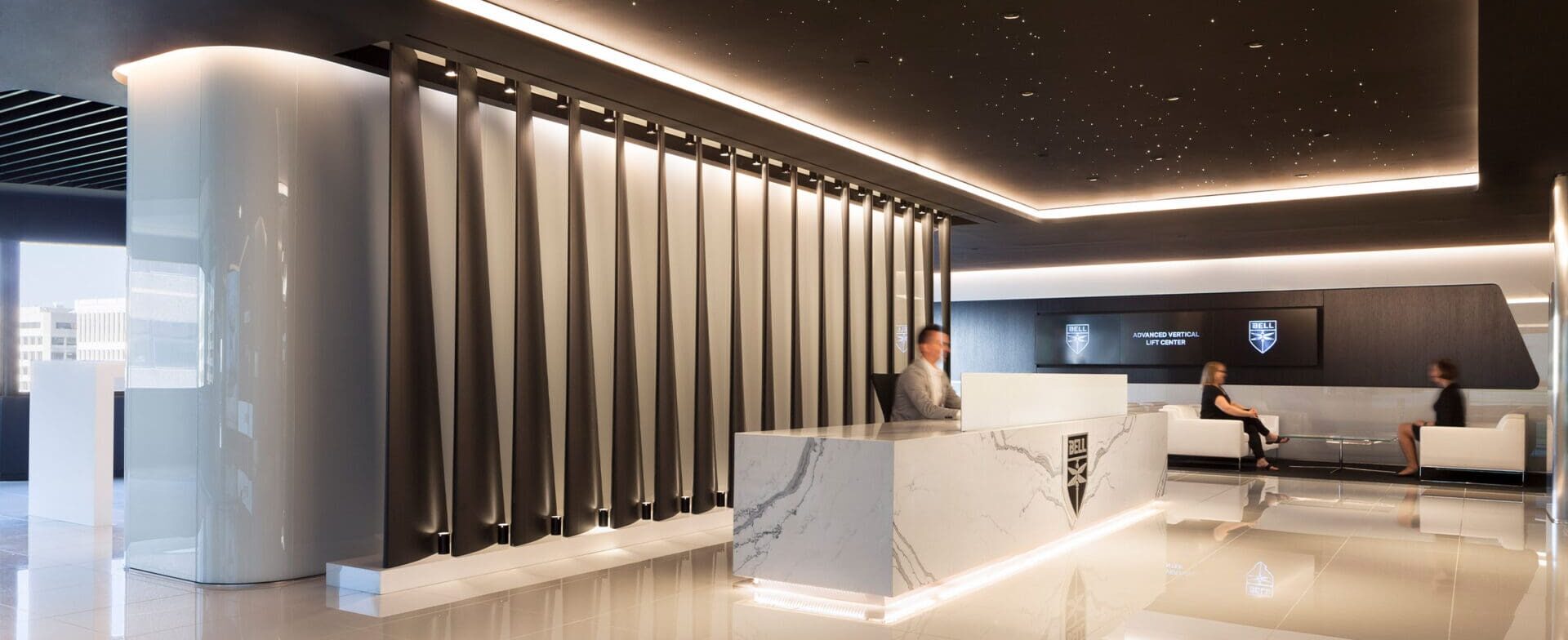
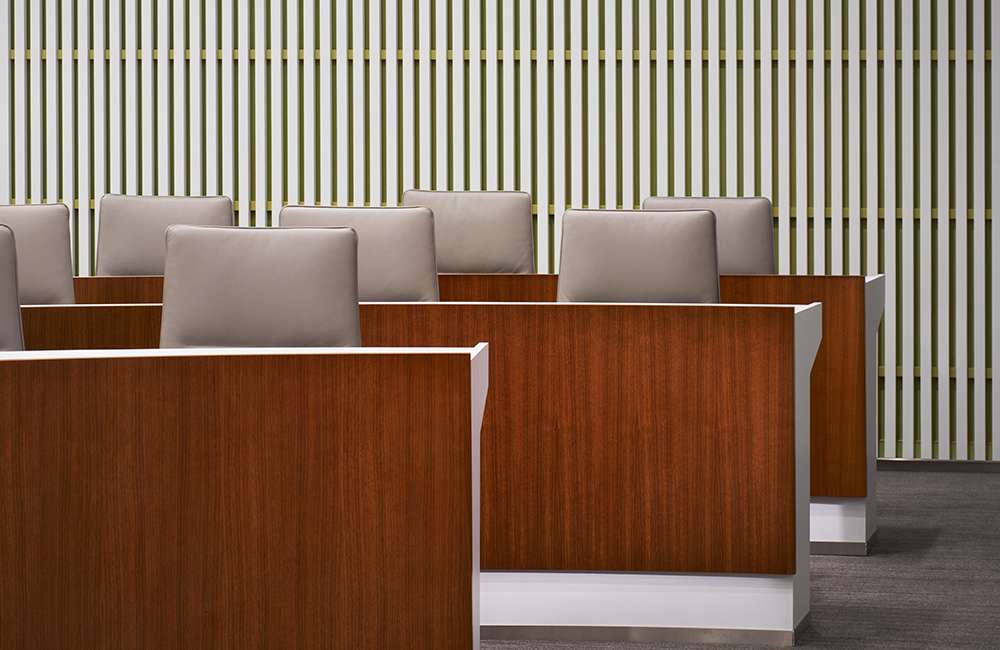
It’s the reception desk in a hotel. The wall paneling in an office. The custom casework in a healthcare space. The wood details that make a commercial environment feel refined, intentional, and complete.
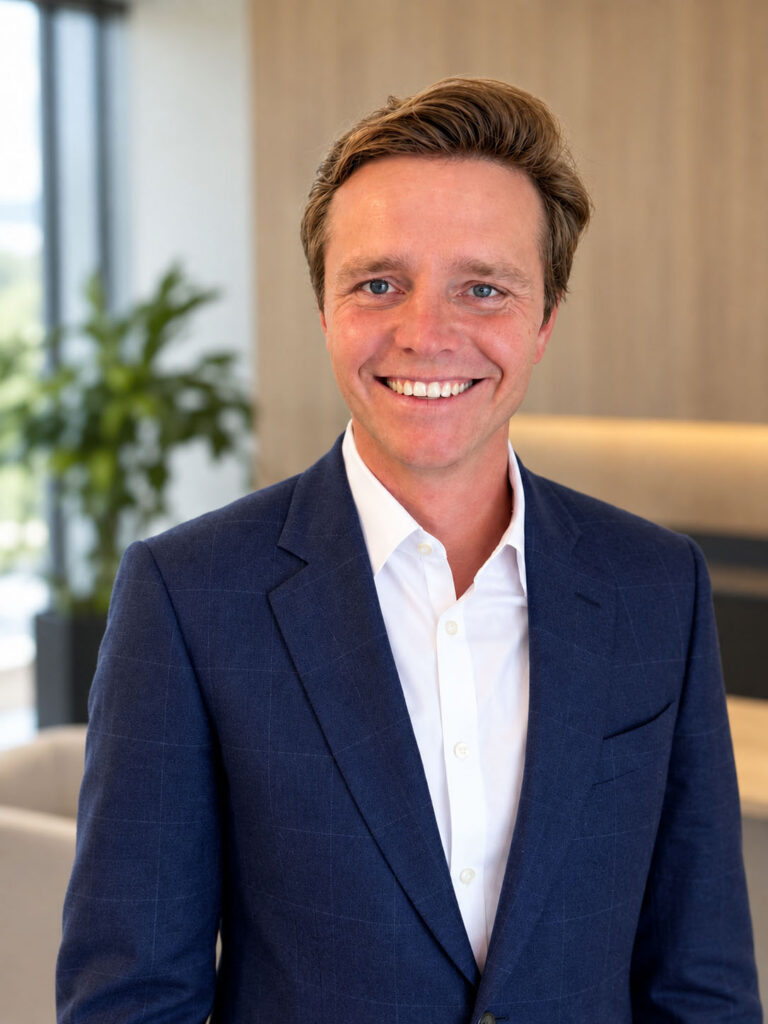
For Isaac Bokros, CEO and part of the ownership group at USAM DC, that finished impression is only the visible part of the work. Behind it is a highly coordinated process of engineering, sourcing, manufacturing, finishing, delivery, and installation — all built around spaces that are often unique, exacting, and on a deadline.
In this Meet the Maker, Isaac talks about the visibility problem facing architectural millwork, the talent pipeline, the role of AI in custom manufacturing, and why skilled human work still matters in the spaces people remember.
You started on the shop floor and worked your way into leadership. What has that path taught you about opportunity in this industry?
I didn’t go to college, but I was fortunate to find a part of the industry where experience really matters.
I started as a machinist. The company trained me on the job as a CNC machinist, and over a few years I got a lot of exposure to operations, materials, and how things actually worked on the floor.
From there, I moved into engineering, then engineering leadership, project management, estimating, operations, and eventually business leadership.
The lesson I took from that path is simple: opportunity usually shows up before you feel ready for it. I tell people in my organization now that if you wait until you feel you’re ready for your next move, you’ve waited too long. When the next opportunity presents itself; you should be worried. You should be nervous. That means you’re growing.
“If you wait until you feel you’re ready for your next move, you’ve waited too long.”
A lot of people talk about a talent gap in the trades and manufacturing. Do you think younger people understand what kind of career is possible here?
Not enough.
I think our industry has a visibility issue. Our product is in built environments everywhere. Everybody sees it. Everybody interacts with it. But when someone asks me what I do and I say I manage an architectural millwork firm, they usually have no idea what that means.
They might know an architect. They understand construction. But they don’t necessarily understand that there is this whole corner of custom manufacturing that serves the built environment.
There’s high-volume manufacturing, where everything is repeatable and automated. Then there’s the corner we’re in, which is more bespoke, one-off custom manufacturing.
It’s work that will likely never be offshored because of construction timelines, site conditions, and project variability. It creates real opportunity for someone to start at an entry level, learn the business, and progress as far as their skills and ambition will take them.
So yes, there’s a talent challenge. But I think part of that challenge is awareness. Young people can’t pursue opportunities they don’t know exist.
How are you trying to make that path more visible?
We’ve developed an internship program where we bring high school students in between their junior and senior year. We also spend time with local educators and career technical education programs to bring industry awareness. Also, each year we participate in MFG Day, which is a nationwide event where manufacturers open their doors for shop tours to middle and high school students.
This isn’t just an architectural millwork problem. It’s a broader manufacturing and trades issue.
For decades, society told kids there was no future in manual work or trade work. The message was that if you wanted to get ahead, you had to go to college and pursue a career in the information economy.
I think that’s changing. Younger people seem more interested in creating things again. But it takes time for that shift to work its way into the workforce pipeline.
With all the conversation around AI, do you see custom architectural millwork as somewhat protected from that kind of disruption?
I think the most protected part of our work is what happens on the shop floor.
We are adopting AI, but primarily in administrative functions: data management, communication, document review, organization. It may touch engineering more than it does today, too.
But the work that happens on our shop floor still requires human intervention. That even limits how much automation we can put into the process.
If you’re building a veneered custom reception desk that is nonlinear, with multiple finishes and multiple materials coming together, there’s no other way to do that right now other than with human skill.
I can imagine a future where robotics perform some functions in manufacturing environments. But the fit and finish that comes from highly skilled tradespeople is very hard to replace.
“The fit and finish that comes from highly skilled tradespeople is very hard to replace.”
What do you wish more people understood about your craft?
Everybody interacts with our product.
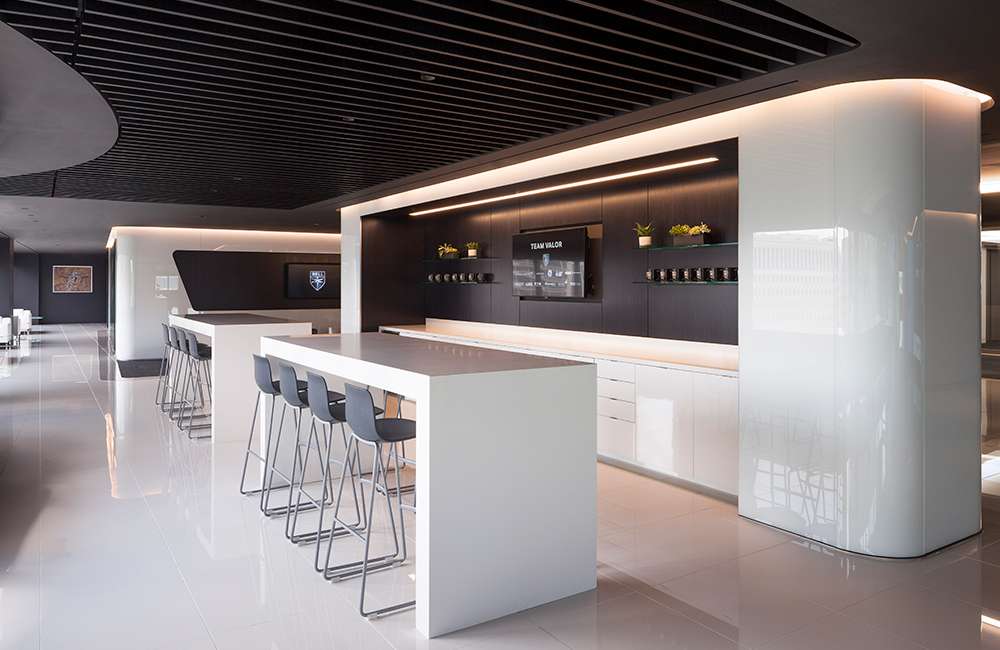
You might be checking into a hotel, going to a sporting event, visiting a doctor’s office, or walking into a professional office. Very few people think about it. They see it as part of the built environment.
But our product is different from a lot of what happens on a job site. Much of the built environment is manufactured at the site. Raw material is delivered, and then it is transformed into the building.
Our product has a very complicated manufacturing process that happens off site, but it still has to fit the space exactly. The space has to be built, measured, or coordinated, and then our product has to be manufactured to fit into it.
On any given project, we might have 40 different vendors and suppliers involved. All of those lead times, specifications, and materials have to be coordinated, delivered to our facility, manufactured, and then delivered to the job site.
So when someone walks up to a reception desk and thinks, “Wow, this space is really cool,” they may not understand the hundreds and hundreds of man-hours that went into creating that piece.
Some of what we’re building, in some ways, is almost like art. We may not be the creative force behind the design, but in terms of the skill involved, the time it takes, and the exacting detail required, what we’re creating is akin to art.
The difference is that this kind of art has to be delivered on a specific day.
When you have choices in sourcing, how do you decide what materials or suppliers to use?
Where we do have a choice, we focus on total value.
For us, value is not always the lowest cost. It’s total performance. It’s delivery. It’s availability.
There are times when we don’t pay the lowest price because we have an important project, an important client, and a deadline. We may pay a little more to get the assurance that the product we need will be delivered on time.
Cost is still important. We’re providing what we feel is a premium product, but the market doesn’t always pay a premium for it. So we have to be thoughtful about where we create efficiency without compromising the work.
But the decision is rarely just, “What is cheapest?” It’s, “What gives this project the best chance of success?”
What do you wish suppliers and distributors would do better?
Communication.
Systematic, consistent communication. Early identification of problems. If something is going wrong, we need to know early enough to do something about it.
We can’t get surprised late. We need our vendors to give us the information we need in order to serve our clients.
Beyond that, I think vendors need to understand and communicate their core competencies. When we’re putting together a game plan that might require 20 or 30 different suppliers, we need to know who is truly great at what.
Some vendors want to say, “We can do everything, and we do it all great.”
That’s not really true of anybody.
What keeps you up at night right now?
Workforce is always on my mind.
Because our work has limited opportunities to remove the human element through automation, we need people. And we need people with a very specific level of skill.
That skill comes from experience. I can’t bring someone into my shop, send them through a six-month program, and expect them to come out with the same skill set as someone who has been working at one of our benches for 15 years.
You have to build bench depth over time. You have to expose people to the right experiences. That takes patience.
The other thing is AI. Not because I think it will replace the shop floor, but because every business leader is asking: What am I missing? What are my competitors doing? What tools are coming six months from now that I should be anticipating?
Right now, I think most of us are using AI in obvious ways. But the next step may be around data.
We get huge amounts of information from clients in the form of drawings and specifications. Then we have to interpret that information, estimate from it, engineer from it, and translate it into documents our shop can use.
That process is still largely manual because nothing is standardized. Every architect communicates differently. Every project is different. AI may help there eventually, but I think it will take time before it creates a real functional advantage.
A lot of people in the supply chain can feel disconnected from the finished built environment. How do you bridge that gap?
That does happen.
Some pieces are recognizable while they’re being built. A desk looks like a desk. A seating element looks like a seating element. But a lot of what leaves our facility doesn’t look like much yet. It might be trim, paneling, or parts that only make sense once they’re installed.
And even if you are seeing the drawings, the shop progress, and the installation, the final product is different when it’s surrounded by the lighting, flooring, furniture, wall finishes, and everything else in the space.
It’s stunning sometimes, seeing it in its finished state. Seeing your little piece of the design, and then seeing the whole design concept come together.
So we try to bridge that gap.
We’ve taken people from the shop to completed installations, especially when they had a significant role in a particular piece. We also use video screens in the shop to show finished project photos and credit the people who worked on them.
Our people care about that. When something leaves the shop, they’ll ask, “How did that go?” or “What did it look like?”
They see themselves not just as part of the process, but also as creators. They’re interested in how their creation turns out.
“Millworkers see themselves not just as part of the process, but also as creators.”
What do you see as the future of your part of the industry?
Our work is all in commercial spaces. After COVID, there was a lot of conversation about whether physical spaces would still matter. Do we need retail stores? Do we need offices? Can’t everyone work from home?
Pretty quickly, I think we learned that humans still need in-person collaboration. We need to be in a space together. We crave experiences.
Office space may look different. A 50,000-square-foot office that was mostly functional ten years ago might now be 20,000 square feet focused on collaboration and experience. Hospitality is similar. People want a more elevated experience when they travel, whether for business or pleasure.
Our product has a place in that.
Designs will come and go. Materials will evolve. But for as long as humans have been building, wood has been part of our structures. And for as long as we’re here, I think it always will be.
Other materials have their place. High pressure laminate has properties that make sense in certain environments, like healthcare. But there are spaces where people expect something more elevated. A law office conference room, for example, is not going to feel the same with plastic laminate wall paneling as it does with beautiful veneer paneling.
People can feel the difference.
It’s hard for me to imagine a product or material that completely disrupts what we do. Companies like ours will continue to evolve, just as they have for decades.
But wood will still matter. The way it looks, the way it feels, the way it changes a space – that’s not going away.