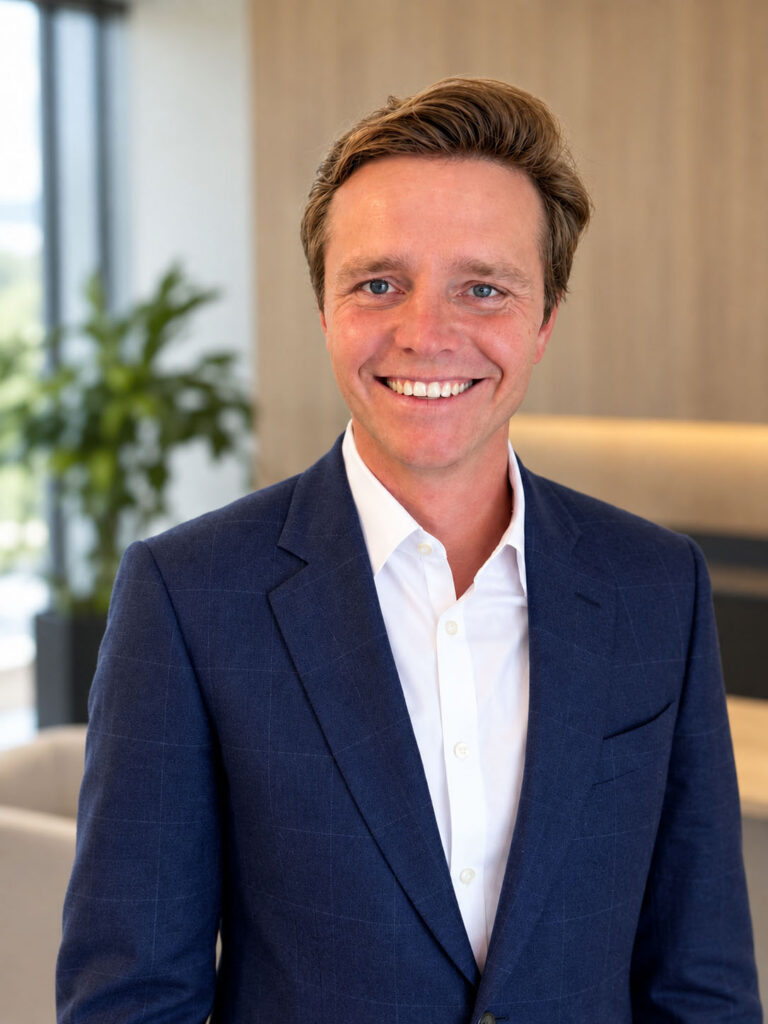
The VP of Sales, Garnica NA speaks on European poplar, building from the ground up, and why service still wins.


At first glance, plywood is judged by what’s on the surface.
But for Brian Wrike, the real story starts much earlier—at the tree, the soil, and the systems behind it.
With over 20 years in the industry, Brian has worked across German, Italian, and now Spanish manufacturing. Today, he leads North American sales for Garnica, helping bring a different kind of plywood to market—one built on consistency, sustainability, and performance.
Let’s start with your background. How did you end up in this industry?
I didn’t plan on it, to be honest.
I started out selling abrasives for a German company, working with boat manufacturers and cabinet shops. From there, I moved into hardware with an Italian company—hinges, drawer slides, that side of the business. Over time, it all connects. Hardware, plywood—they all end up in the same applications.
I’ve spent my whole career working with European manufacturers. Germans, Italians, and now the Spanish with Garnica. I didn’t think this is where I’d land, but it’s worked out.
What was it about Garnica that made you want to make the move?
I had seen the product before as competition, and I knew if I ever had the chance to represent it, I’d take it.
It’s a different level of plywood. Not your typical import. It’s engineered differently, it performs differently.
A lot of the team here came from domestic suppliers. They saw the same thing I did. At some point, you either keep competing against it—or you become part of it.
You mentioned it’s different. Where does that difference actually start?
It starts with the tree.
That’s the part a lot of people don’t see. Garnica uses European poplar, grown in managed plantations. The trees are planted, pruned, and harvested on a cycle—about 12 to 15 years.
They’re all the same age. That consistency matters.
When you peel those logs, you get a much more consistent product. Fewer voids, more stability, better performance overall.
“There’s a science behind it. It starts with the soil, the water, the consistency of the trees.”

So it’s not just about the panel—it’s about the system behind it?
Exactly.
We work directly with farmers. We provide the clones, they grow the trees, and it’s replanted like a crop. It’s sustainable, but it’s also controlled.
That’s how you get consistency at scale.
What does that enable you to do that others can’t?
It opens up a lot of possibilities.
We make fire-rated panels that are treated all the way through—not just sprayed on the surface. So when you cut into it, it’s still fire-rated.
We make marine panels that work the same way—treated through the core for outdoor use.
We do foam core panels that are extremely lightweight. We do oversized panels—5 foot wide, 4×10, things that help customers get better yield.
Garnica is a premium product. How do you approach selling that in a market that often defaults to price?
We don’t lead with price.
We talk about quality. We talk about service. We talk about what it’s going to do for you.
At the end of the day, if you try to save a little upfront and it causes problems later, it costs you more. Most of our customers understand that.
“We don’t talk about price. We talk about quality and how we’re going to service you.”
You’ve mentioned service a few times. What does that mean in practice?
It means being available. It means following through.
If someone calls, you answer. If you can’t, you call them back. That sounds simple, but it doesn’t happen as much as it should anymore.
That’s still a big differentiator.
You’ve also changed how you operate in the U.S. with warehousing. How has that impacted things?
It’s been huge.
We used to be 10 to 12 weeks out on lead times. Now we’re closer to two weeks because we’re stocking material here.
We’re not just making to order anymore—we’re making for stock.
“Having it here and ready to go has changed the game for us.”
The last few years have been volatile across supply chains. How has that affected your approach?
It’s constant.
Tariffs, freight, fuel costs—it all plays a role. You can’t control most of it, so you focus on what you can control.
Inventory is one of those things. Being prepared makes a big difference.
We move a lot of material—containers in and out every month. That helps buffer against disruption.
What are you seeing from architects and designers right now? What do they care about?
Sustainability is a big one.
We’re carbon net positive, which matters for LEED, FSC, all of that. That helps us get specified into projects.
Fire-rated is another big driver. Once you’re on the spec, things move quickly.
And then it’s weight, consistency, performance—all the practical things that make their projects easier.
Looking ahead, where do you see things going over the next 5–10 years?
I think you’ll see more European-style cabinetry here.
Frameless systems, bigger panels, more design flexibility. It’s already happening.
Homes are getting taller. Kitchens are getting bigger. People want cleaner lines and fewer seams.
That plays right into what we do.
What’s your philosophy when it comes to building a business in this space?
It’s pretty simple.
Take care of people. Provide a good product. Be consistent.
If you do that, everything else tends to fall into place.
“If you service people and take care of them, it goes a long way.”