On the hidden world of MDF, choosing the right material for the application, and bringing a new generation into wood products.
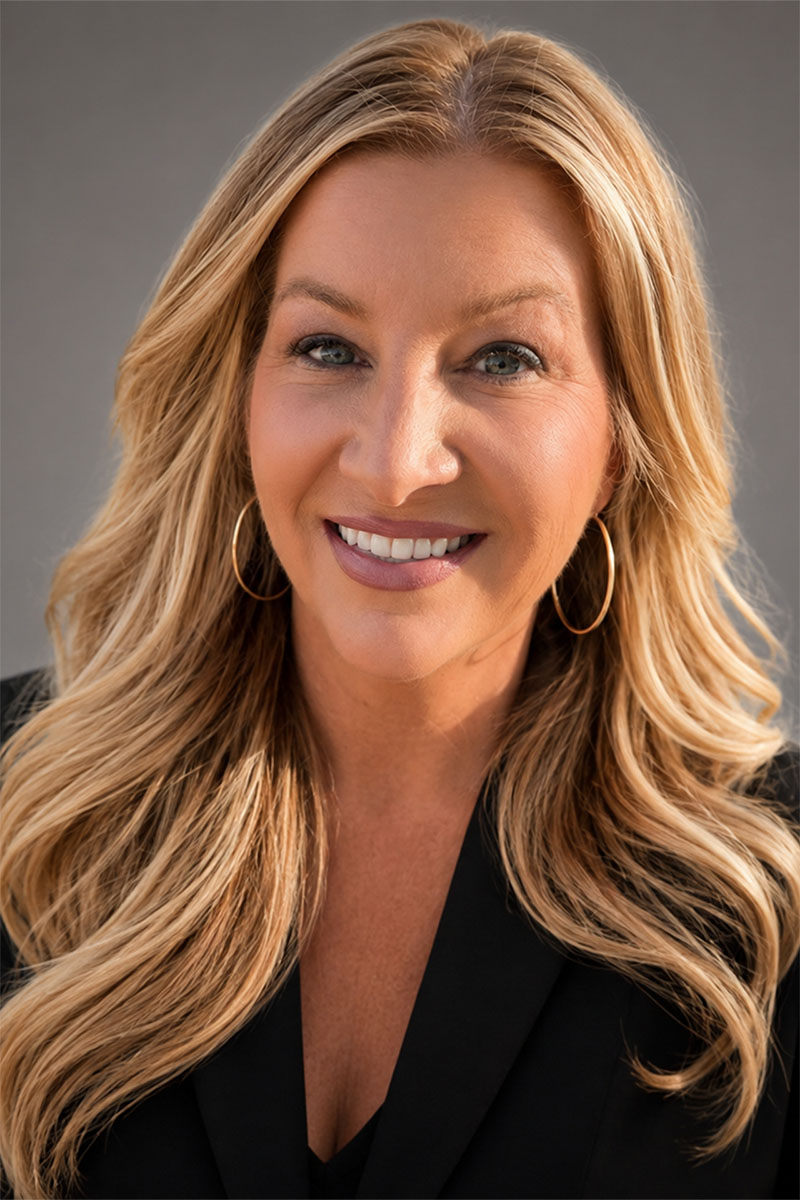
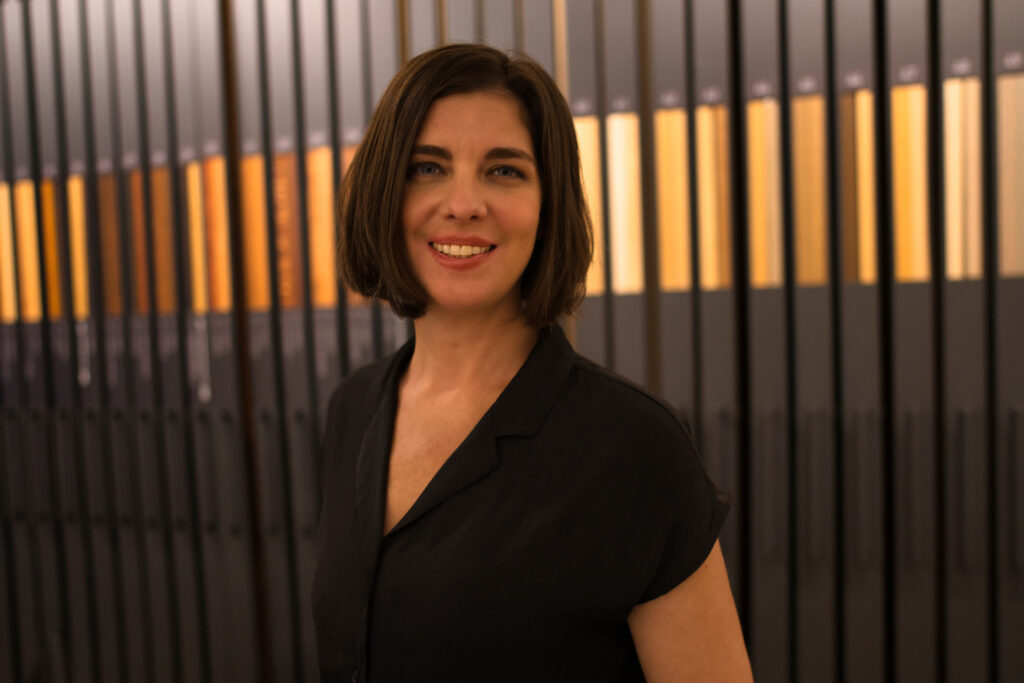
Jamie Shull never planned on a career in wood products.
She arrived at SierraPine shortly after college expecting to spend a week helping with accounts receivable. Nearly 21 years later, she is still in the industry, now serving as Territory Sales Manager for Roseburg Forest Products across Southern Oregon, California, Nevada, Arizona, and New Mexico.
Along the way, she has worked in accounting, credit management, executive support, and sales. She has covered territories spanning the Northeast, the entire United States, and Canada. She has watched specialty MDF evolve from a relatively small category into an increasingly sophisticated market.
And she has developed the kind of product knowledge that comes from spending decades asking one deceptively simple question: What are you actually trying to build?
For Jamie, that question sits at the center of everything from product selection to distributor relationships to the future of the industry itself.
You didn’t exactly grow up planning to work in wood products. How did you get here?
Not at all. It never crossed my mind.
I had just graduated from college in Las Vegas, and a really good friend of mine worked for an employment agency. She needed somebody to work at a company for a week in accounting. I’m good with math, I had a business degree, so I said, “Okay.” That company was SierraPine.
I started in accounts receivable in 2006. I would do the aging, go through the mail, post the checks, and I was basically finished in an hour. By the end of that first week, they were telling me, “You can’t leave. We need to give you a full-time job.”
They offered me a position as executive assistant to the president while I continued doing accounts receivable. About a year later, I became credit manager, too. It was a really great organization because they were focused on creating a career path for me.
Eventually, the CFO gave me two choices. I could go back to school, get my CPA, and move toward becoming a controller at a mill, or I could explore sales. Being a controller was definitely not my personality. So in 2009, I went into sales.
Did sales immediately feel like the better fit?
Definitely.
My first territory was the East Coast, which is actually how I got to know Chesapeake. Then I covered the Northeast for years, eventually the whole country and Canada.
When SierraPine was sold in 2015, Roseburg acquired the Medford MDF mill I represented. I was able to move into Roseburg, keep my seniority, and continue doing what I loved.
Starting on the accounting side turned out to be incredibly valuable. I learned the business from the inside out. I understood receivables, credit, risk, how customers operated, and what made a healthy relationship. Then I could take all of that knowledge into sales.
At this point, I can’t imagine doing anything else. I started in my twenties. I’ve met amazing customers and coworkers, and people in this industry have watched me grow up, get married, and have kids.
It’s a large industry, but it feels like a very small family.
What do you love about working with wood products?
There are just so many possibilities.
When somebody asks what I do for a living and I say, “I sell wood,” they usually look at me like, “What kind of wood?” Then I start pointing things out.
You walk into a Starbucks and there’s MDF in the cabinetry. You go into stadiums and there’s MDF in suites and lockers. We supplied exterior-grade MDF used in signage at the Bellagio fountains for the Super Bowl.
Crown molding, cabinets, ceiling panels, door cores, blinds. MDF is everywhere. Most people are surrounded by it every day and don’t even realize it.
That’s one of the fun parts for me. I love knowing what happens to the material. Whenever somebody comes to me with a big quote, I immediately want to know: Where is it going? What are you building?
I like seeing the whole process.
“MDF is everywhere. Most people are surrounded by it every day and don’t even realize it.”
So the material becomes a way of connecting yourself to the finished project?
Exactly.
Right now, with the Olympics coming to Los Angeles in 2028, we’re seeing MDF quotes connected to everything from college dorm renovations to signage.
Someone else might not think that’s exciting. I think it’s super cool.
You start looking around and realizing how much of the built environment depends on these materials.
What are architects, designers, and manufacturers asking for right now?
Supply has become incredibly important.
There has been so much uncertainty around imports, tariffs, borders, and lead times that customers want to know they can actually get the product. Then it comes down to consistency.
Specifiers want to know that what they choose is going to perform the way they expect. They want a mill that has been around, understands the product, and can produce it consistently.
Price always matters, but if a material is inconsistent and creates problems later, the cheap price upfront doesn’t mean very much.
Where does the distributor fit into that equation?
For us, the best distributors are strategic partners.
We want partners that understand the product and are willing to support the range rather than simply picking up a unit here and there.
Chesapeake is a good example. They stock almost every specialty MDF brand we offer, so if somebody is looking for something unusual, there’s a good chance they have it on the floor.
But inventory is only one part of it. What I really pay attention to is the sales team.
I want outside salespeople who are knowledgeable and curious. People who want to find the right solution for the end user rather than simply sell whatever is easiest.
One of my favorite things to do is join a distributor’s Friday sales meeting. I want to know the salespeople face to face. I want them to feel comfortable texting me and saying, “Can we make this size?” or “What should I offer for this application?”
That relationship matters.
It sounds like curiosity is almost as important as product knowledge.
Absolutely.
I get calls where someone will say, “My customer is specifying this particular MDF.”
My first question is: “Why?” Sometimes the salesperson doesn’t know. Then I’ll say, “Go find out.”
What is the application? Does it need moisture resistance? Is it going into a high-traffic environment? What does the customer actually need the panel to do? You have to dig deeper.
There are great distributors all over the country where the salespeople really understand MDF. They know which panels make sense for which applications. And if they don’t know, they call us instead of guessing.
That is hugely important.
“I really try to encourage sales people to dig deep and find out what the end application is.”
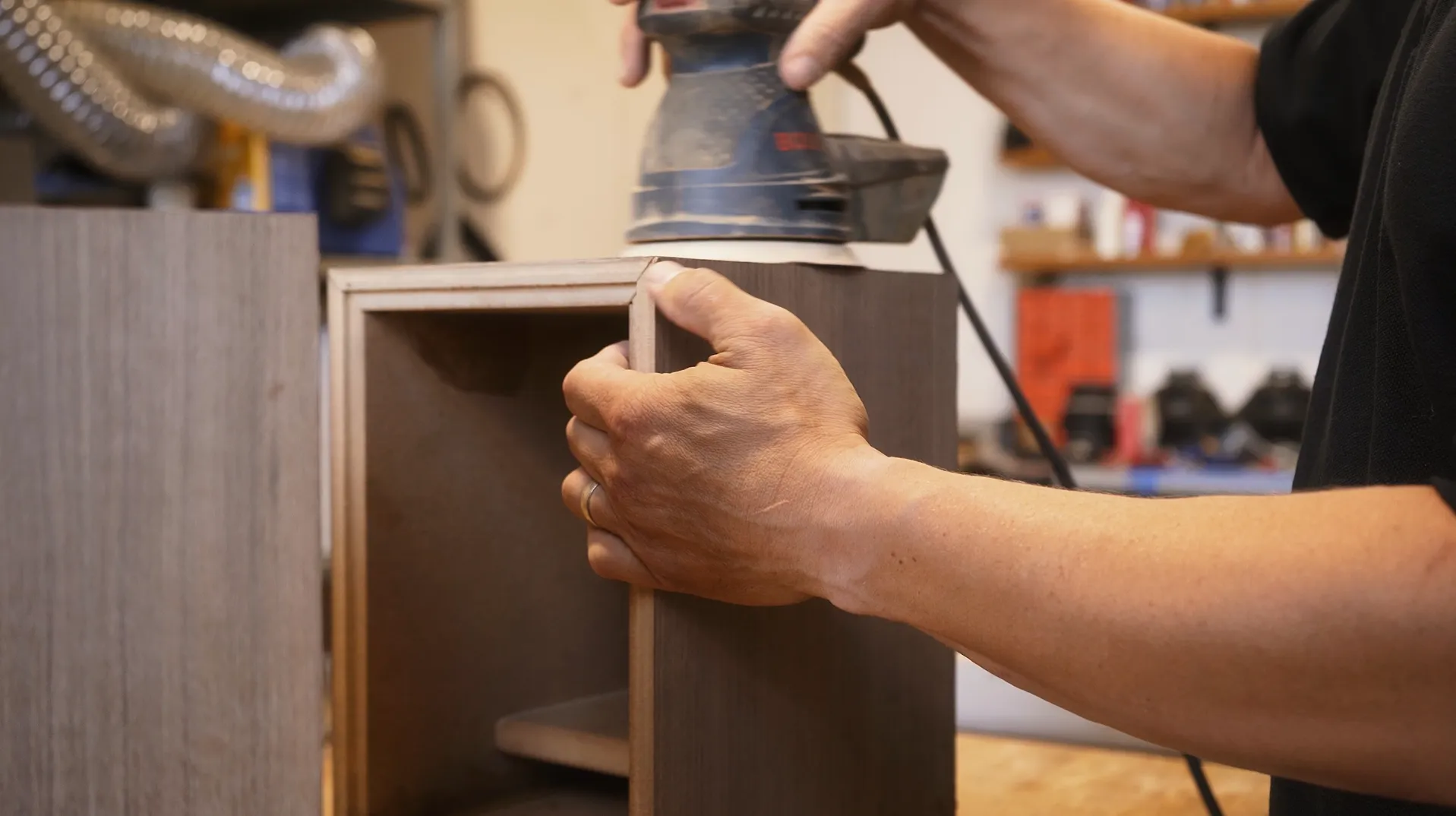
Are you seeing MDF itself become more specialized?
Very much so.
There’s interest in panels that solve more than one problem. Moisture-resistant and fire-rated performance is one example.
We’re also hearing more requests for black-dyed MDF across applications like elevator panels, ceilings, treadmill decks, and some door applications.
Customers want lighter panels. They’re paying attention to no-added-formaldehyde products. FSC certification remains important, and architects and specifiers continue to look at environmental and healthy-building requirements.
Exterior-grade MDF is another area where the technology is becoming much more sophisticated.
The important thing, though, is education.
With a technically advanced panel, choosing the right product is only the beginning. You also have to understand machining, finishing, and installation requirements.
That knowledge has to travel all the way through the supply chain.
You’ve been in specialty MDF long enough to remember when there was much less competition. What has changed?
When I started, there were specialty products where we basically had no competition. That’s completely different today.
Mills across the United States and Europe manufacture specialty MDF, and imported material can sometimes enter the market at pricing that is extremely difficult for domestic manufacturers to compete with.
So competition keeps me on my toes. You have to understand exactly what you’re competing against, and you have to keep proving why consistency, specifications, service, and technical performance matter.
Another issue we hear repeatedly in this series is the loss of experienced people from the industry. Are you seeing that too?
All the time.
There’s a generation of people retiring right now, and there isn’t necessarily another generation coming in behind them at the same rate. And it isn’t just sales.
Mills struggle to find employees. Trucking is facing the same problem. There are experienced people leaving across the entire supply chain.
A former boss of mine talks about a 20-year gap in the industry. I’m 49 now, and so many people I’ve known throughout my career are retiring. Then you look 20 years younger and there simply aren’t enough people entering wood products.
That’s a real concern.
What do you think the industry can do about it?
We have to show people that these careers exist.
Most people I know in wood products stay in the industry for a very long time. It can be an incredible career. But young people can’t choose something they never see.
My son just started high school and wanted to take wood shop. His school doesn’t offer it. A lot of schools in California don’t anymore because there aren’t enough wood shop teachers.
They do have an engineering class where students can learn CNC, which is great. I’d love to see those worlds come together.
If young people get their hands on wood in middle school or high school and discover that they enjoy making things, they can begin to see a path. We need to start earlier and do a much better job of showing them what this industry can offer.
“Young people can’t choose something they never see. We need to promote these careers much earlier.”
Do you think technology or AI changes that equation?
Technology is definitely becoming part of the business, but I don’t think it removes the need for people.
We’re seeing more automation in things like order processing and EDI, but those systems still make mistakes. You still need experienced people who understand what they’re looking at and can fix the problem.
And there are so many jobs built around physical skills, relationships, judgment, and making things in the real world.
That is something I talk about with my own kids. Trades, construction, manufacturing, forestry, electrical work, plumbing. These are real careers where people are going to continue to be needed.
Looking five or ten years ahead, where do you think the wood products industry is going?
I think we’ll continue to see consolidation.
There are manufacturers, distributors, millwork companies, and other family businesses where owners are reaching retirement age and the next generation may not want to take over. So I think we’ll see more businesses joining together.
On the manufacturing side, I also think there will be a push toward larger, highly efficient mills with the technology and scale to compete against imports.
Roseburg is investing in that kind of capacity now. The goal is to manufacture products and thicknesses we haven’t historically produced while becoming more efficient and competitive.
Technology is going to keep changing. Products are going to become more sophisticated. But I think the fundamentals will stay surprisingly familiar. You still have to know the material. You still have to understand the application. And you still need good people who care enough to ask the right questions. That’s what has kept me in this industry for almost 21 years.
And I don’t see that changing.