How LVL stringers and primed risers bring consistency and efficiency to stair manufacturing.
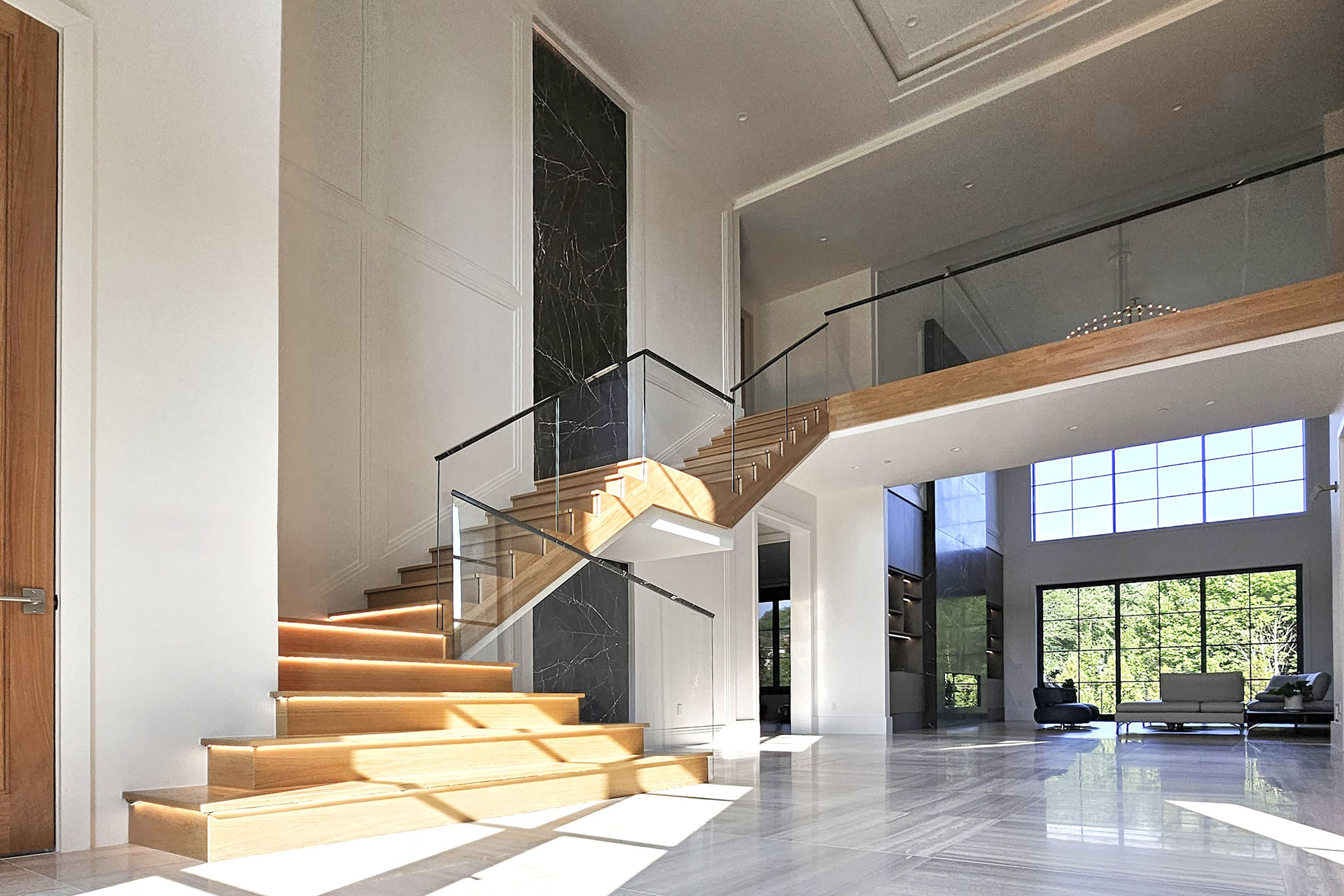
A beautifully finished staircase can make a complex piece of craftsmanship look effortless.
Clean lines, precise joins, and carefully matched materials come together in something that feels simple and natural.
But behind every well-built staircase is a series of decisions that begin long before installation. And few are more important than choosing the right materials.
In our recent Meet the Maker interview with Jeff Held, CEO of Century Stair Systems, we explored the precision and discipline required in modern stair manufacturing. One of the recurring themes was how engineered wood products have transformed the industry, giving manufacturers greater control over material performance without compromising craftsmanship.
Two products that demonstrate this evolution are laminated veneer lumber (LVL) stair stringers and primed stair risers.
Engineered for Consistency
Traditional solid lumber has long been used in staircase construction, but its natural characteristics can introduce challenges. Wood movement, twisting, bowing, and variations between boards can complicate fabrication, particularly when working with longer components or producing stairs at scale.
Laminated veneer lumber offers a more predictable alternative.
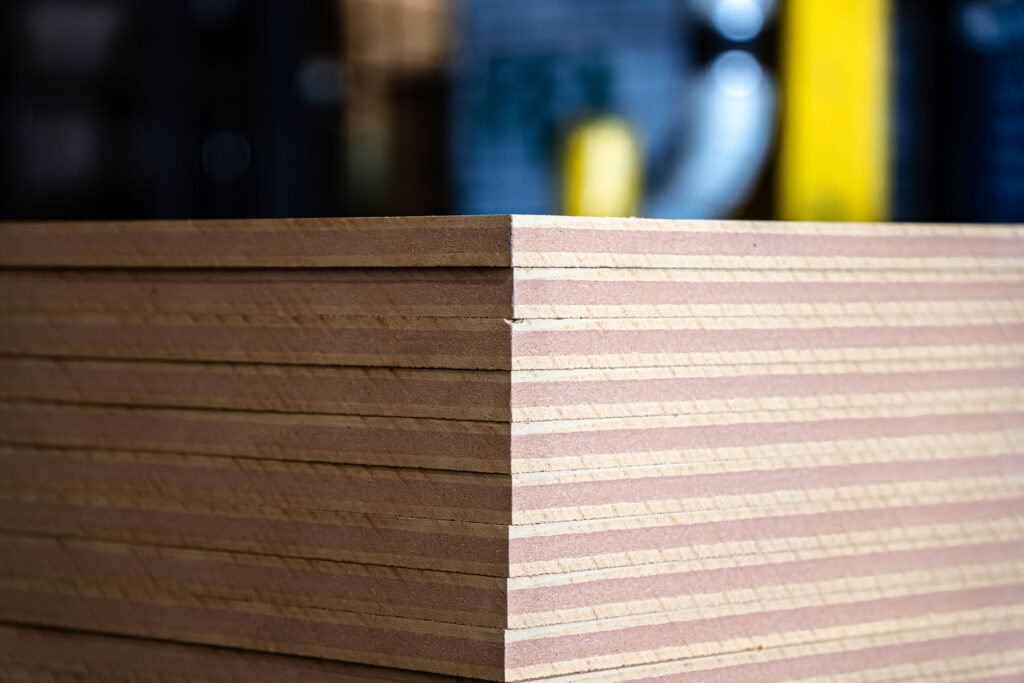
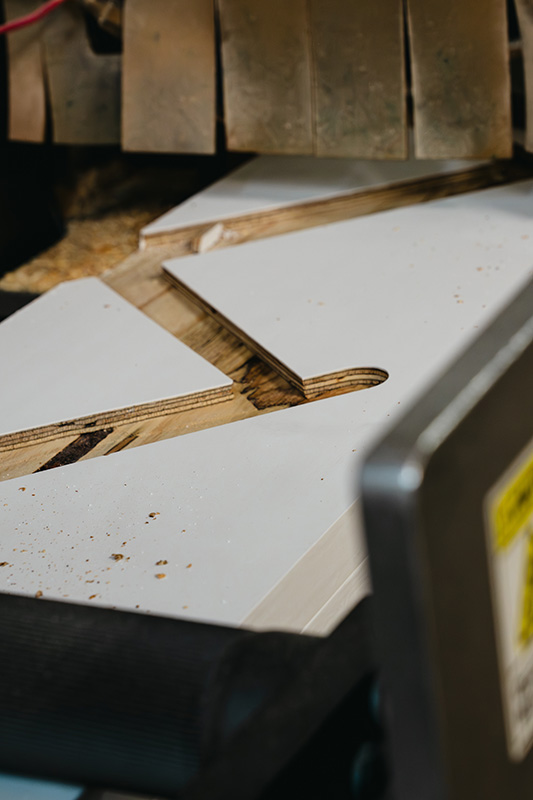
Manufactured from multiple layers of wood veneer bonded together with the grain running parallel, LVL is engineered to deliver consistent strength and dimensional stability. Its construction makes it less susceptible to the warping, twisting, and shrinking commonly associated with traditional lumber.
For stair manufacturers, that predictability matters. Straighter, more consistent material makes it easier to maintain accuracy through cutting, machining, assembly, and installation.
Chesapeake’s primed LVL stair stringers are manufactured using Radiata Pine veneers and exterior-grade adhesive, with a smooth, paintable primer finish. Available in a range of lengths and thicknesses, including custom dimensions, they provide flexibility for both repeatable production and more specialized staircase designs.
The Value of a Finish-Ready Riser
The same thinking applies to stair risers.
While the tread often attracts the most attention, the riser plays an important role in a staircase’s finished appearance. Painted risers create a clean visual contrast with natural wood treads and remain a popular choice in both traditional and contemporary interiors.
But achieving that clean finish consistently takes time.
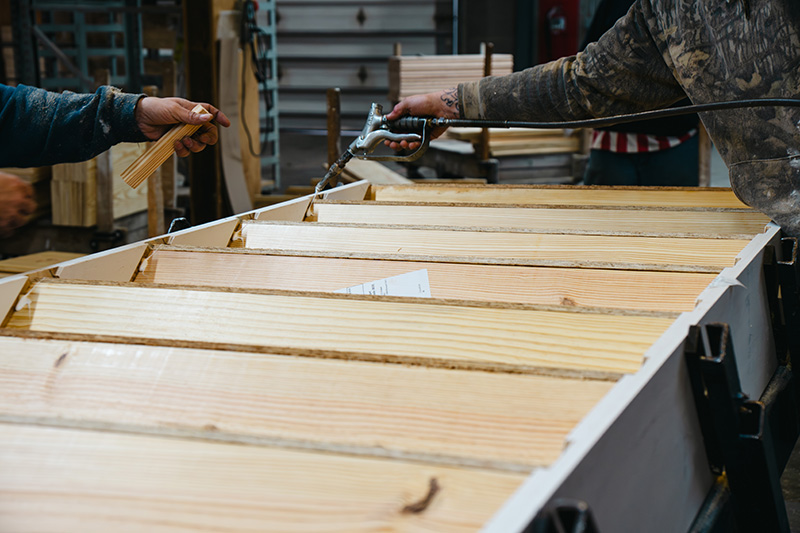
Chesapeake’s primed riser material is manufactured from finger-jointed Radiata Pine, primed twice, and sanded smooth. The result is a consistent, paint-ready surface that reduces the preparation required before final finishing.
Available in pre-cut and full-length options, the material gives manufacturers flexibility to accommodate different stair dimensions and production requirements.
It’s a relatively simple innovation, but one that can make a meaningful difference when multiplied across dozens or hundreds of components.
Better Materials Support Better Craftsmanship
During our conversation, Jeff Held reflected on how material selection has evolved over nearly four decades in stair manufacturing.
“Today, we use solid wood where character and wear demand it, and engineered materials where consistency and strength matters most.” – Jeff Held, Century Stairs
It’s an important distinction.
Engineered materials aren’t intended to replace the skill of the stair builder. They help create the conditions in which that skill can be applied more effectively.
For manufacturers balancing traditional craftsmanship with modern production processes, this means choosing materials according to the demands of each component. Solid hardwood still has an essential role in visible, high-wear surfaces, while engineered products can provide the stability and predictability needed elsewhere in the assembly.
The best results come from understanding how those materials work together.
Precision Starts Before Production
For stair manufacturers, material performance is only part of the equation. Reliable availability, consistent specifications, and predictable delivery are equally important to keeping production moving.
That’s why Chesapeake stocks a range of specialty stair manufacturing materials, including LVL stringers, primed risers, and complementary stair components. With custom sizing, flexible stocking programs, and dedicated logistics, we help manufacturers maintain access to the materials their production schedules depend on.
Because in stair manufacturing, precision isn’t something that happens only at the workbench. It starts with the materials you choose, the systems you build around them, and the standards you maintain from beginning to end.