From precision millwork to moisture, fire and exterior applications, MDF is far more versatile than it gets credit for.
MDF is easy to underestimate.
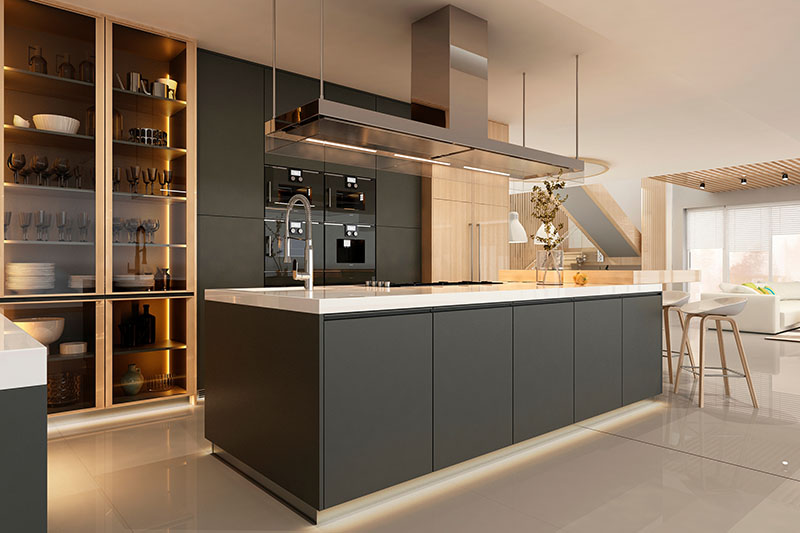
For many people, medium density fiberboard means one thing: a smooth, paintable panel used for cabinet doors, millwork and furniture.
But MDF is less a single product than a family of engineered panels. Change the density, resin system or manufacturing process, and you can create materials designed for very different jobs, from lightweight fixtures and intricate CNC work to moisture-resistant interiors and fire-rated commercial environments.
Understanding those differences can make MDF one of the most useful materials in the shop.
Why MDF works so well
The advantage starts with consistency.
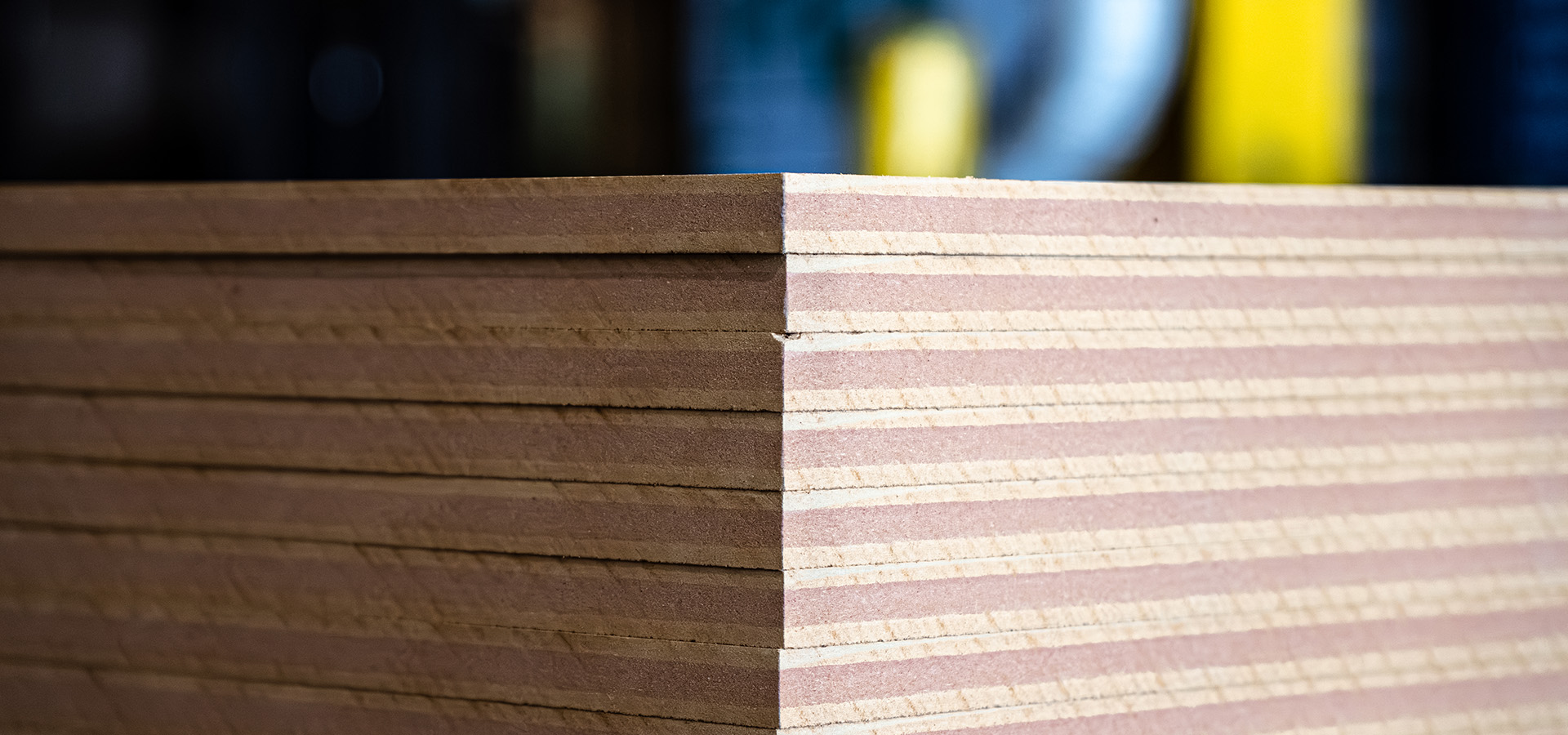
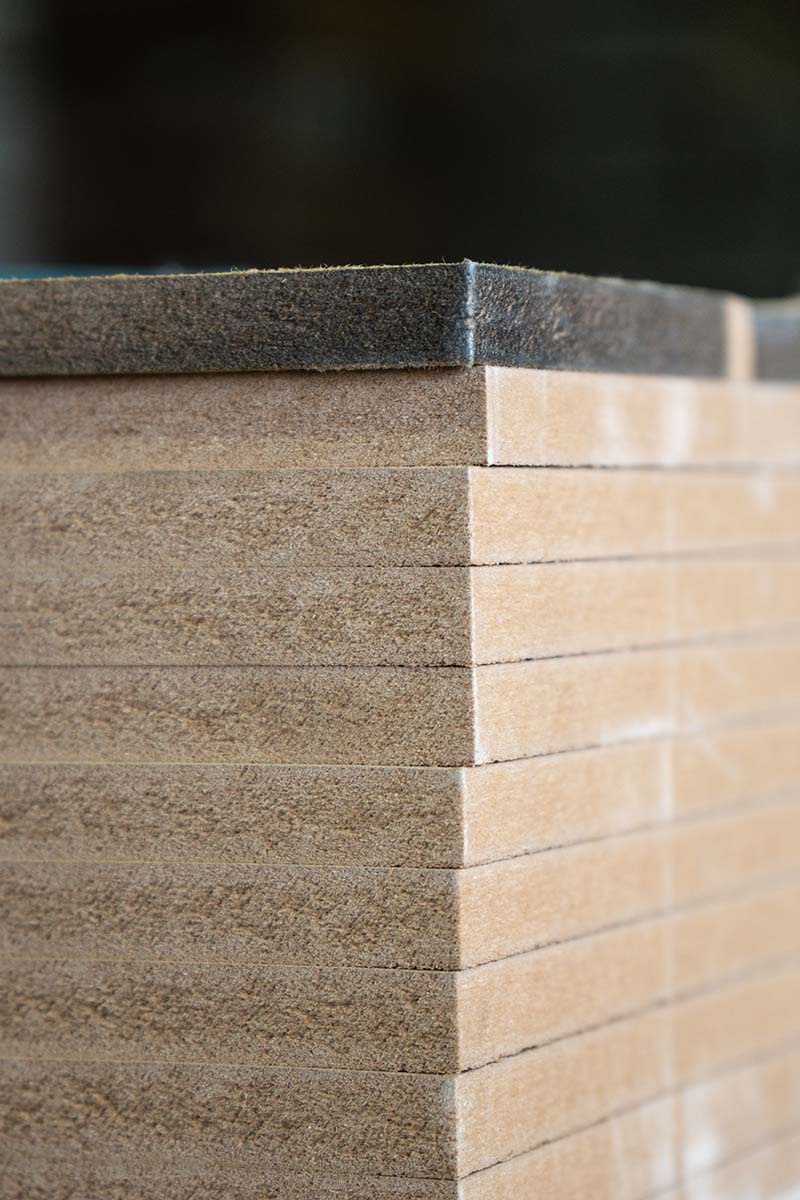
MDF is manufactured from wood fibers and resin pressed into dense, stable sheets. Unlike solid wood, there is no grain direction, knot pattern or natural variation to work around. The result is a uniform material that can be routed, shaped, drilled, painted and laminated with a high degree of predictability.
That matters when the finished work depends on clean profiles and repeatability.
West Fraser’s Ranger Board, for example, is manufactured for uniform density and is particularly well suited to detailed shaping and routering, as well as painted, laminated and wrapped applications. UltraStock Select and Premium are similarly designed around smooth surfaces, consistent machining and finishing.
For cabinetmakers, fixture manufacturers and architectural millworkers, that consistency is often the point.
The better question: which MDF?
The interesting thing about MDF is how much its performance can change depending on the panel.
Rather than simply specifying “MDF,” it is worth starting with what the finished component actually needs to do.
When weight matters
Traditional MDF can get heavy quickly, particularly in larger components, fixtures and installations.
Ultra Light MDF reduces density while maintaining the smooth surface and workability that make MDF useful in the first place. The material weighs approximately 30 percent less than standard MDF and is intended for non-structural applications including mouldings, store fixtures, furniture, RV and boat cabinetry, and routed or shaped components.
For work that gets transported, assembled on site or simply handled repeatedly in the shop, reducing panel weight can make a meaningful difference.
When moisture is part of the environment
Standard MDF and moisture are not natural partners, but moisture-resistant grades change the equation.
Roseburg Medex is engineered specifically for interior applications where moisture is a concern. It combines moisture resistance with enhanced physical properties and a no-added-formaldehyde adhesive system, while retaining the machining characteristics expected from MDF. It is intended for non-structural interior applications rather than exterior siding or trim.
UltraStock also includes moisture-resistant grades for applications where greater resistance to thickness swell and moisture exposure is required.
The distinction matters: moisture-resistant MDF is not the same thing as exterior MDF.
When fire performance is specified
Commercial interiors can introduce another requirement entirely.
Roseburg Medite FR is a Class 1/A fire-rated MDF in which the flame-retardant additive is incorporated throughout the fiber during manufacturing rather than applied only to the surface. That means the panel can still be cut, machined, sanded and grooved without removing its flame-retardant treatment.
For architectural millwork and interior applications where fire performance is part of the specification, that gives fabricators the familiar workability of MDF in a purpose-built panel.
When the project goes outside
Exterior work requires another material approach.
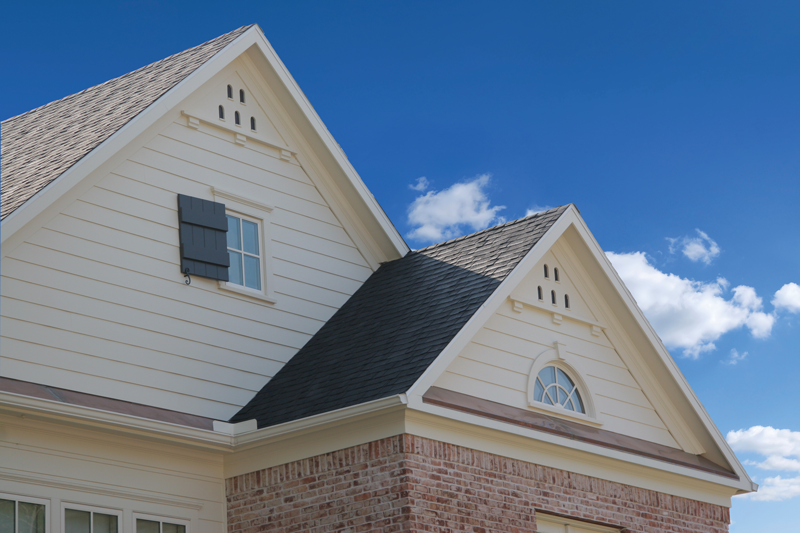
Extira is an exterior-grade engineered composite panel designed to resist moisture, rot and termites while remaining workable for routed and machined components. Chesapeake stocks it in thicknesses from 1/2 inch to 1 inch and in 4-by-8 and 4-by-16-foot formats.
That makes it an option for applications where the smoothness and machinability associated with MDF are desirable, but standard interior MDF simply is not appropriate.
When the profile is the product
Sometimes the value of MDF is not just what gets built on top of it. It is what can be machined directly into it.
Nantucket Beadboard uses precision milling to create consistent bead profiles inspired by traditional tongue-and-groove paneling. It is available in sheet and strip formats, with unfinished and primed options and multiple profiles.
It is a good example of what happens when MDF’s uniformity becomes part of the design itself.
Look past the material name
The takeaway is simple: specifying MDF is only the beginning.
For the fabricator or project team, the more useful questions are:
- How extensively will the panel be machined?
- Is weight important?
- Will moisture be present?
- Is a fire rating required?
- Is the application interior or exterior?
- Does the project require unusual sizes or thicknesses?
- What kind of finish will be applied?
Those decisions can point toward very different panels, even though each starts in roughly the same material family.
And the available range is broader than many people realize. Certain MDF lines are manufactured in widths up to five feet and lengths of 16 to 18 feet, alongside specialized densities, thicknesses and performance grades.
A material built for making
The best substrate often disappears into the finished work.
You notice the sharp painted profile. The perfectly repeated cabinet fronts. The clean architectural paneling. The fixture that is light enough to move easily. The detail that looks exactly the same on the hundredth component as it did on the first.
Behind all of those outcomes is a material decision.
MDF has earned its place in manufacturing because it is predictable, workable and adaptable. But getting the most from it means moving beyond the idea of MDF as a commodity and choosing the panel around the demands of the finished work.
Because the right MDF does more than fill the spec. It makes better work possible.