Why White Oak is in demand, and what it takes to get the details right.
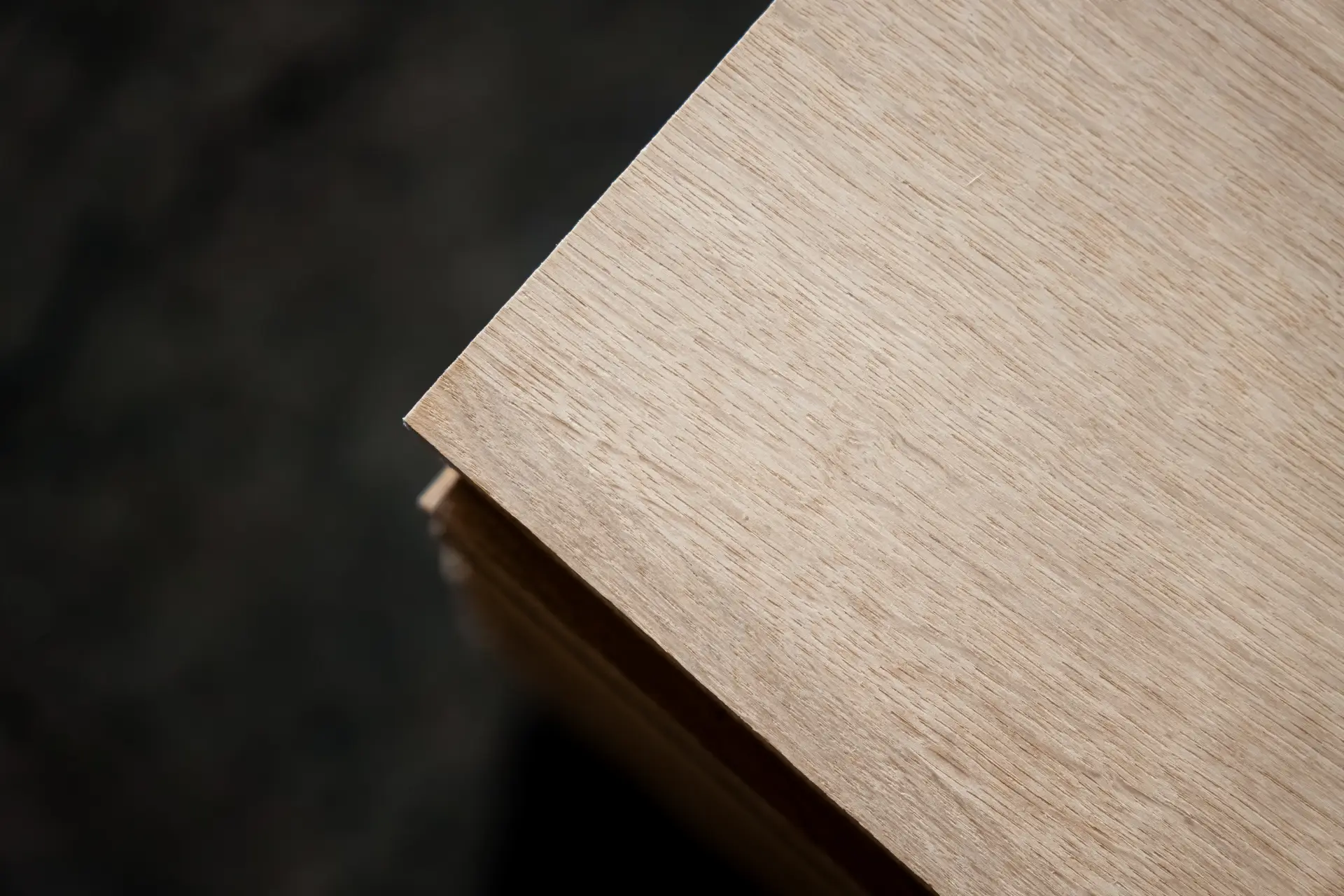

From contemporary interiors to precision-matched architectural veneer, White Oak has become one of the most sought-after materials in design. But there’s more to this familiar hardwood than meets the eye.
White Oak is having a moment. From high-end residential kitchens to commercial millwork, hospitality interiors, and architectural wall panels, its distinctive grain and natural warmth are finding their way into some of today’s most compelling spaces.
The numbers reflect what designers and manufacturers are seeing firsthand. According to the National Kitchen & Bath Association’s 2027 Kitchen Trends Report, White Oak is the wood of choice for 49% of surveyed kitchen designers. And in Houzz’s 2026 U.S. Kitchen Trends Study, wood tones overtook white as the most popular cabinet color in renovated kitchens, chosen by 29% of homeowners compared with 28% for white.
It’s part of a broader shift toward materials that bring warmth, texture, and a sense of authenticity into built environments. But while White Oak may appear effortless in a finished space, achieving that appearance is anything but simple.
Behind every beautifully matched panel is a series of decisions about where the wood comes from, how it’s cut, how its grain is arranged, and how consistently it can be reproduced. Understanding those decisions is what separates a good material specification from a great one.
Why White Oak Works So Well in Contemporary Design
White Oak has a quality few materials can match: it can feel both contemporary and timeless.
Its relatively neutral tones work with a remarkable range of finishes and design styles. Left natural, it can create a pale, understated surface that complements minimalist architecture. With a warmer finish, it brings richness and character to residential interiors. Its grain can provide quiet texture in one application and become a defining visual feature in another.
Unlike materials that depend on a particular color or treatment to make an impression, White Oak has an inherent versatility. It works alongside stone, metal, glass, concrete, and other natural materials without competing for attention.
That flexibility is especially valuable in commercial interiors, where designers increasingly want spaces to feel welcoming without compromising sophistication. White Oak can bring a sense of warmth to an expansive hotel lobby, add texture to a contemporary office, or provide visual continuity across an entire architectural millwork package.
And while its current popularity is undeniable, White Oak isn’t a new discovery. It has been valued for centuries in furniture, joinery, flooring, and architectural applications. What’s changing is how designers are choosing to express it.
Not All White Oak Looks Alike
One of the most important things to understand about White Oak is that the name alone tells you surprisingly little about how a finished panel will look.
Even within the same broad category, White Oak can vary considerably in color, grain, and character. Some material has the soft, oatmeal tones designers associate with natural contemporary interiors. Other material leans golden, gray, or even slightly pink.
Part of that variation comes from geography.
American White Oak is a group of related species, principally Quercus alba, found across eastern North America. European Oak, typically Quercus robur or Quercus petraea, is closely related but has its own characteristic grain and coloration. Growing conditions also matter. Soil, climate, and the rate at which a tree develops can all influence the appearance of the timber.
A good example is Decospan’s Alpen White Oak, a premium European-origin veneer developed from carefully selected timber sourced from a particular growing region.
In its marketing materials, Decospan described how the region’s soil and climate contributed to a distinctive pale, white-yellow color and pronounced grain. By concentrating on a specific source and applying rigorous grading standards, the company sought to achieve a more consistent architectural appearance.
It’s an important distinction. The question isn’t simply whether a product is White Oak, but whether it’s the right White Oak for the intended result.
The Cut Changes Everything
If geography helps determine White Oak’s natural character, the way a log is sliced determines how that character appears on the surface.
For architectural veneer, three principal cuts produce very different effects.
- Crown cut, also called plain sliced, reveals the familiar cathedral-shaped grain patterns associated with traditional oak. The sweeping movement of the grain creates a more expressive, natural appearance, often desirable in furniture and interiors where character is part of the design.
- Quarter cut produces a straighter, more linear grain, often revealing the distinctive medullary rays found in oak. These appear as lighter flecks or shimmering patterns that can become particularly prominent under certain finishes and lighting conditions.
- Rift cut also produces a linear grain but minimizes those prominent ray flecks. The result is a cleaner, more uniform appearance that has become especially desirable in contemporary cabinetry and architectural millwork.
The difference may seem subtle when viewed as individual samples. Across an entire wall elevation or a series of cabinet fronts, however, it can completely change the character of the space.
This is why the veneer cut should be treated as a design decision, not simply a technical detail left to the manufacturer.
The Hidden Craft of Veneer Matching
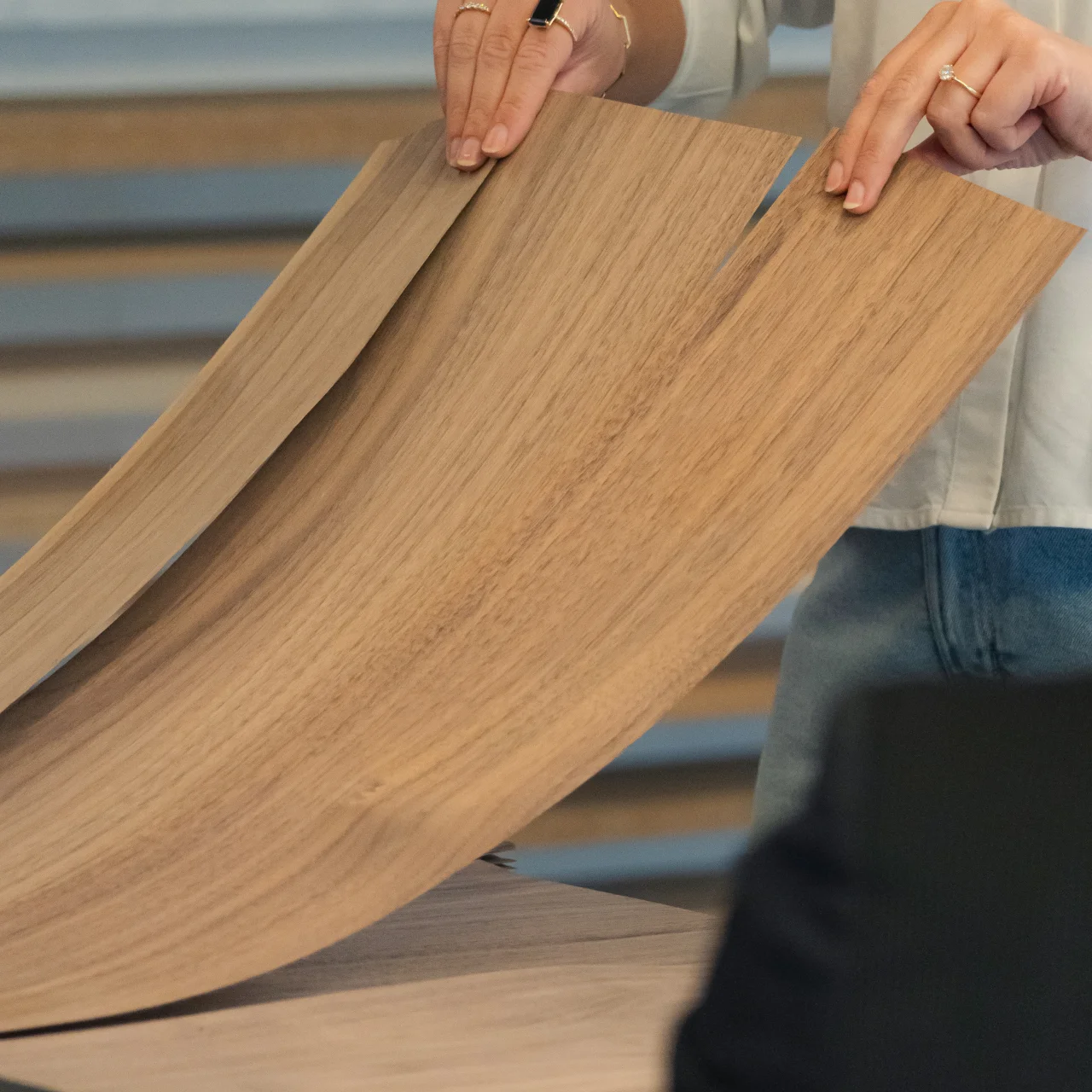
Slicing is only part of the process. Once the veneer leaves have been produced, they must be arranged and joined to create the finished surface.
In book matching, alternating veneer leaves are opened like pages of a book, creating mirrored grain patterns. This can produce beautiful symmetry, but it can also introduce a visual effect known as barber poling, where adjacent leaves appear lighter or darker because they reflect light differently.
Slip matching places consecutive leaves alongside one another without flipping them. This helps create a more consistent grain direction and can reduce the contrast associated with book matching.
Mix matching takes a different approach, combining carefully selected veneers to achieve a more natural, plank-like appearance. It can be particularly effective when the goal is visual consistency without making every panel look identical.
The Architectural Woodwork Institute has emphasized how cut and matching decisions affect the finished appearance of architectural veneer, and why they need to be considered during specification.
What appears to be a simple, uninterrupted surface is often the result of painstaking selection and arrangement.
Why Consistency Matters More Than Ever
As White Oak becomes more prominent in contemporary interiors, expectations around consistency become more demanding.
A single cabinet door can accommodate a certain amount of natural variation. An entire reception area, retail interior, or sequence of architectural wall panels presents a different challenge.
Subtle differences in tone or grain can become much more apparent when panels are installed side by side. A pinkish cast that seems insignificant in an individual sheet may stand out against a neighboring panel with a more neutral tone. A different grain structure can interrupt the visual rhythm of an otherwise carefully composed elevation.
In our Meet the Maker interview with Dean Hogan of Decospan, he explained how the company manages natural variation by grouping veneers according to color before producing panels.
Rather than attempting to eliminate the character of real wood, the process brings greater control to how that character is expressed.
Ben Horstman of Dimension Hardwoods made a related point in his own Meet the Maker interview:
“A beautiful panel starts with the right veneer.”
It’s a simple observation with significant implications for manufacturers. Excellent craftsmanship and finishing cannot always compensate for a poor initial material selection.
For projects involving large quantities of White Oak, the decisions made before fabrication can be just as important as the work carried out in the shop. When inconsistencies lead to rework, replacement orders, or project delays, the cost can quickly outweigh any savings made on the original material. It’s a challenge we explored in more detail in The Real Cost of Cheap Plywood.
The Surprising Competition for White Oak
White Oak’s popularity creates another interesting challenge: the architectural woodworking industry isn’t the only one competing for it.
American White Oak is prized for its strength, durability, and distinctive grain. But it has another remarkable physical characteristic. Its heartwood contains microscopic structures called tyloses, which block many of the wood’s pores and make it relatively resistant to liquid penetration.
That property has made White Oak particularly valuable in the manufacture of barrels for wine and spirits.
It also means that cabinetmakers, flooring producers, furniture manufacturers, architectural woodworkers, and barrel manufacturers can all be drawing from the same broad timber resource.
Industry reporting in 2026 highlighted competition for desirable White Oak logs across these markets, particularly from cooperages. The picture is not one of universal shortages. White Oak remains widely available, but premium grades, specific grain characteristics, and tightly controlled color ranges can be more challenging to source consistently.
And there is a longer-term question around the forests themselves.
The White Oak Initiative, an organization focused on the future of American White Oak forests, estimates that roughly 75% of White Oak trees in the eastern United States are mature. While existing timber resources are considered sufficient for near-term demand, younger trees are not regenerating at the same rate.
It’s a reminder that responsible sourcing is about more than meeting today’s material requirements. It also means protecting the forest ecosystems that will supply future generations of makers.
Getting the Look Without Compromising the Work
For designers and manufacturers, White Oak’s versatility creates opportunities, but also decisions.
Natural veneer offers the character and individuality of real wood, with considerable freedom in grain selection, matching, substrate, and finish. Products such as Alpen White Oak demonstrate how selective sourcing and grading can create a more controlled architectural appearance while preserving the material’s natural beauty.
Prefinished veneer panels offer a different solution. Decospan’s Shinnoki collection, for example, includes contemporary oak finishes on real wood veneer panels that are brushed, stained, and lacquered during manufacturing. This reduces the need for additional finishing while providing a coordinated system for panels, veneer, and edges.
Neither approach is inherently better. The right choice depends on the design intent, required appearance, fabrication process, performance specifications, and scale of the project.
What matters is asking the right questions early. What tone is the designer trying to achieve? How much variation is acceptable? Should the grain be expressive or restrained? How will the veneer be matched across adjoining panels? What substrate and finish are appropriate? And will matching materials be available when the project needs them?
These are not minor details. They directly influence the quality, efficiency, and consistency of the finished work.
A Timeless Material, A Higher Standard
Design trends will continue to evolve. The popularity of particular tones, finishes, and grain patterns will rise and fall. But White Oak has endured for centuries because it offers something more fundamental: natural beauty, strength, versatility, and the ability to take on remarkably different expressions.
Its current popularity is an opportunity to appreciate not just the material, but the expertise behind it. From the forester selecting a tree to the veneer specialist grading a log, the manufacturer matching panels, and the craftsperson bringing a design to life, every stage contributes to the result.
The best White Oak interiors may look effortless. That’s usually a sign of how much care went into getting the details right.